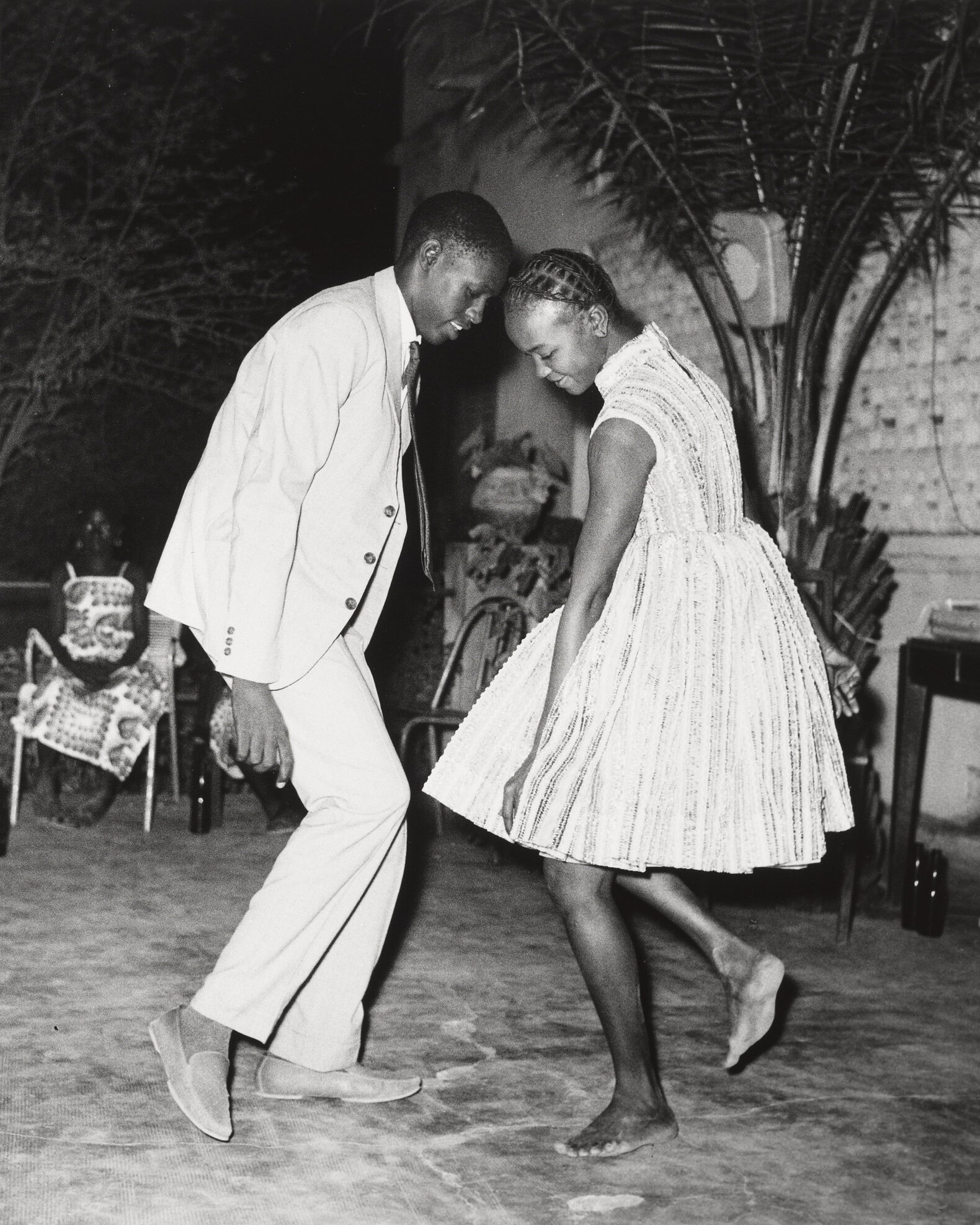
MALICK SIDIBÉ
Malick Sidibé (c.1935–2016, born Soloba, French Sudan, now Mali) was a Malian photographer whose black-and-white portraits and reportage from the clubs, parties, and riverbanks of Bamako in the 1950s, 1960s, and 1970s constitute one of the most joyful and historically significant bodies of photography produced on the African continent in the twentieth century. Born in a Peul village, Sidibé trained as a jewellery maker before studying painting at the École des Artisans Soudanais in Bamako, graduating in 1955. That same year he was apprenticed to French photographer Gérard Guillat, and in 1957 he began documenting the everyday life of Bamako’s youth culture with a warmth and intimacy that captured the energy and optimism of a nation making its transition from colony to independence.
His remarkably intimate photographs of young Africans at dance clubs and parties, sporting events, and on the banks of the Niger River are suffused with the joy of a generation intoxicated with Western music and fashion while remaining deeply rooted in their own cultural identity. His work remained largely unknown outside Mali until the early 1990s, when European art critic André Magnin encountered his studio by chance and began to bring his photographs to international attention. He was included in major exhibitions across Europe, the United States, and Japan throughout the 1990s and 2000s.
Sidibé received the Hasselblad Foundation International Award in Photography in 2003 and the Golden Lion for Lifetime Achievement at the Venice Biennale in 2007, the first photographer and first African artist to receive the award. His work is held in the permanent collection of the Museum of Modern Art, New York, among others.