Artists You Should Know: Irving Penn
Celebrated for his masterful printmaking and uncompromising formal vision, Irving Penn remains one of the most consequential photographers of the twentieth century.
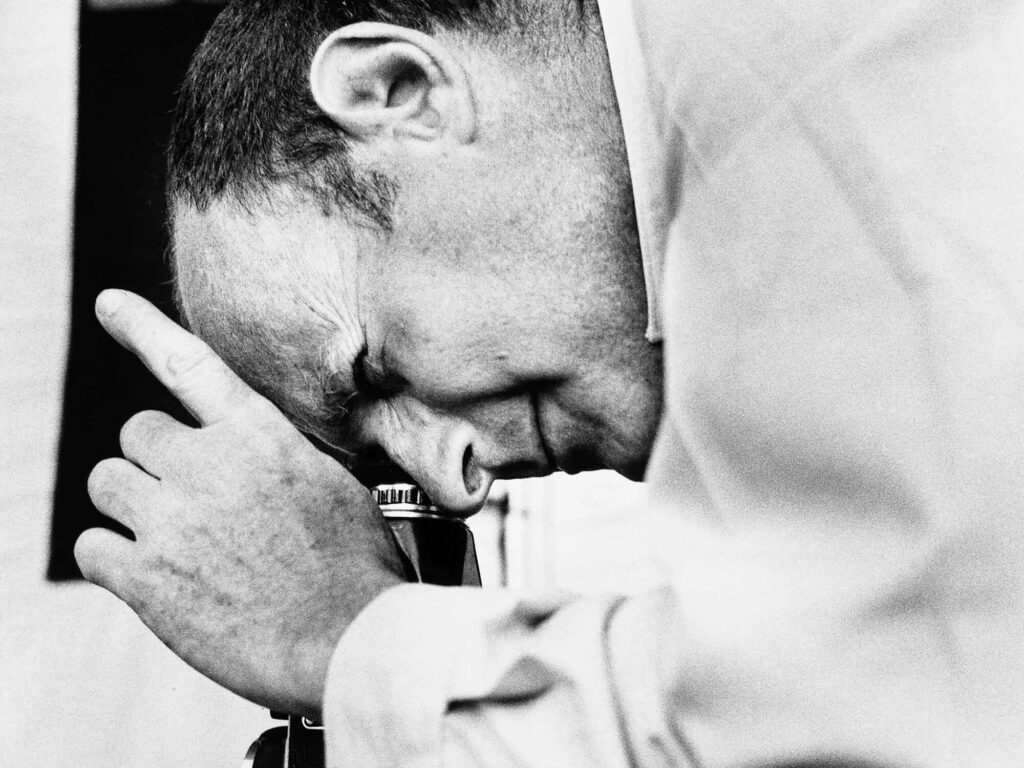
Irving Penn (1917–2009) is one of the most influential photographers of the 20th century, celebrated for his formal precision, masterful printmaking, and an ability to bring equal authority to fashion, portraiture, and still life. His sixty-year tenure at Vogue magazine produced some of the most recognized images in photography’s history, and his parallel pursuit of fine art photography, including his revival of platinum-palladium printing in the 1960s and 1970s, positioned him as one of the first photographers to bridge commercial and museum-grade practice at the highest level. His work is held in the permanent collections of the Metropolitan Museum of Art, the Smithsonian American Art Museum, MoMA, the Victoria and Albert Museum, and the National Gallery of Art.
Ithaca Gallery holds Penn across multiple bodies of work and actively advises collectors on acquisition across the full range of his oeuvre.
The Life and Work of Irving Penn
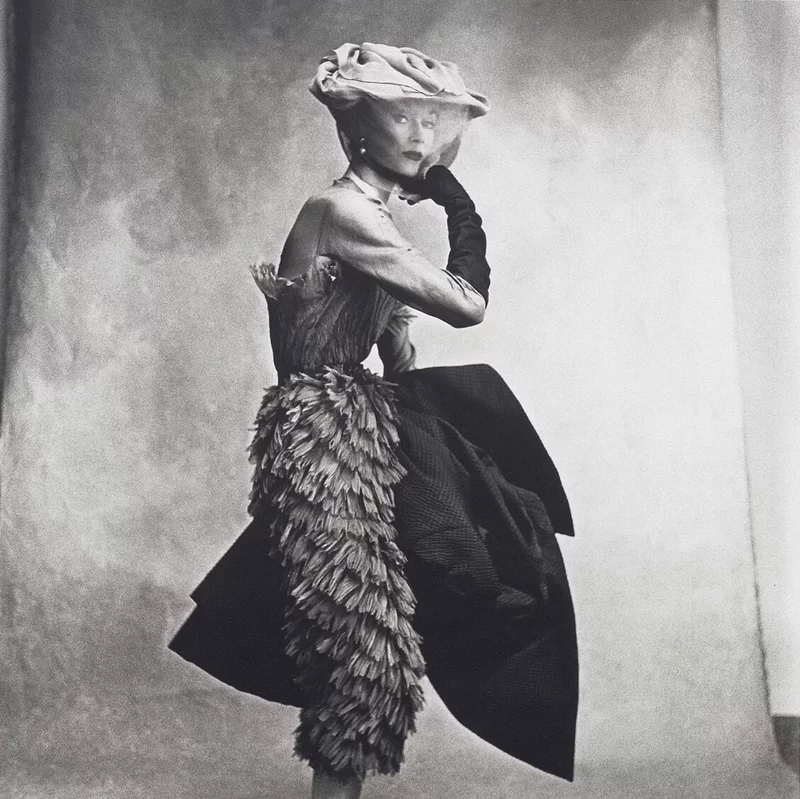
Penn was born in Plainfield, New Jersey and studied design under Alexey Brodovitch at the Philadelphia Museum School of Industrial Art before joining Vogue in 1943, where he would remain for six decades. His working method was defined by reduction. Plain or gray backgrounds, natural studio light, and the removal of everything that competed with the subject produced a formal economy so consistent that his photographs are identifiable at a glance across every genre he worked in.
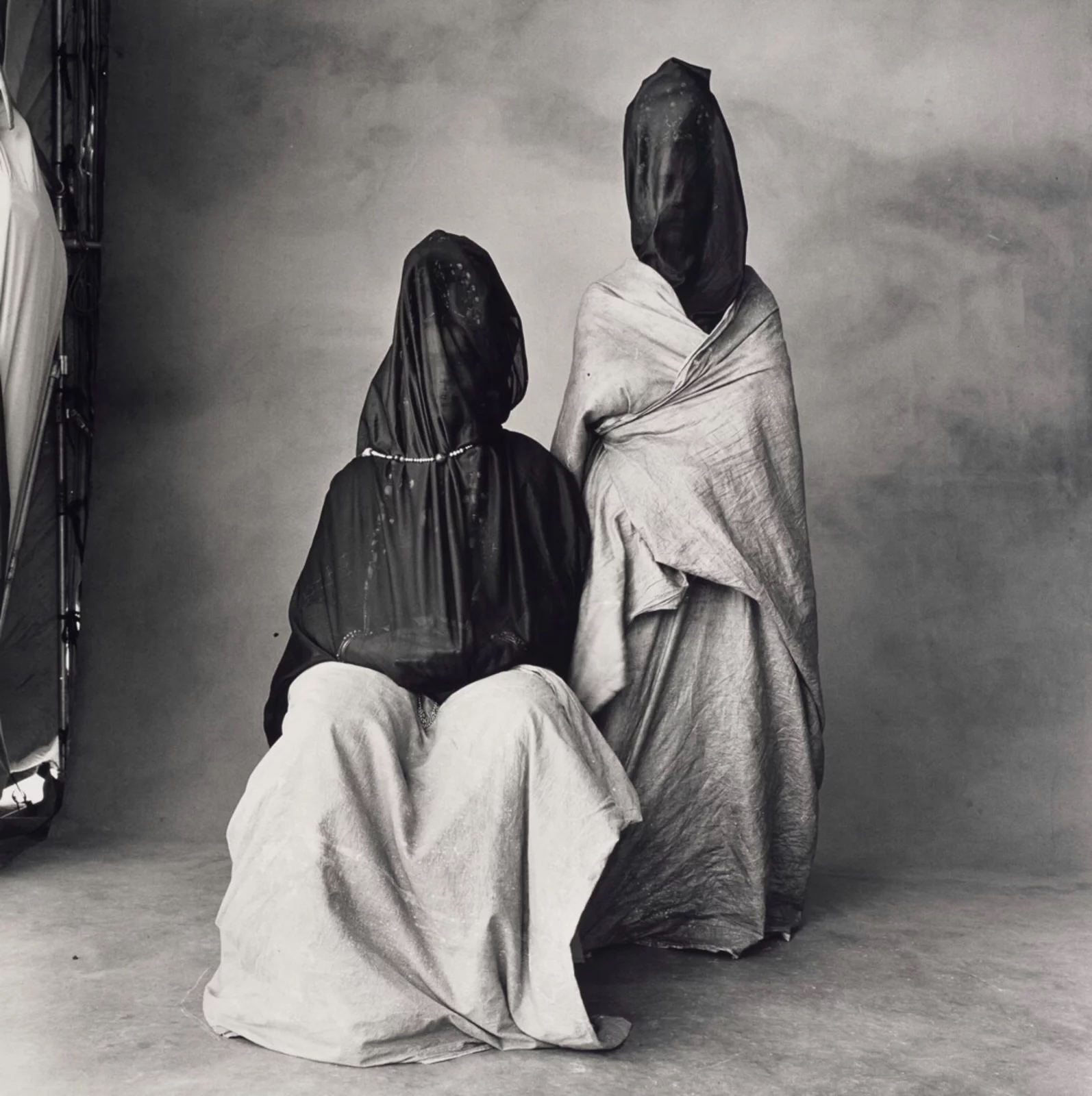
From 1948, Penn undertook a series of travel expeditions he described as records of physical presence, bringing a custom-built portable tent studio to Peru, Spain, the Cameroon, New Guinea, Nepal, and Morocco to photograph local communities under conditions he controlled. The Moroccan work, produced across visits in 1951 and 1971, spans his Vogue fashion commissions and a later expedition to Guelmim commissioned by the Metropolitan Museum of Art, where he made platinum-palladium field portraits that rank among the most formally resolved work of his career.
Penn’s revival of platinum printing had consequences beyond his own practice. It reestablished a nineteenth-century process as a serious medium for fine art photography and contributed directly to the broader institutional recognition of photography as a collectible art form. He was awarded the Hasselblad Foundation International Award in Photography in 1985 and received the Smithsonian’s Archives of American Art Medal. His work was the subject of a retrospective at the Metropolitan Museum of Art in 2017, organized in partnership with the Irving Penn Foundation.
Why Penn’s Work Endures
Penn’s photographs hold their position in major institutional collections on the strength of their formal quality. His minimalist compositions, built on precise figure-ground relationships and complete control of light and space, do not read as period work. That consistency across subject matter and decade is the mark of a photographer working from a developed formal philosophy rather than responding to the aesthetic conditions of any given moment.
His editions were small. Platinum-palladium prints were produced in editions of six to nine. Lifetime gelatin silver prints, made under direct studio supervision and carrying the Condé Nast copyright stamp, were similarly controlled. The Irving Penn Foundation, which manages his estate, maintains rigorous standards around authentication and authorization, keeping provenance clean and supply disciplined. Penn’s works circulate at auction less frequently now than a decade ago, with 131 works sold in 2014 compared to 77 in 2024, a contraction that reflects both Foundation stewardship and the tendency of serious Penn holdings to remain in collections rather than return to market.
Irving Penn in the Market
In October 2025, Phillips offered 70 lots from the Irving Penn Foundation in a dedicated sale titled Visual Language: The Art of Irving Penn, estimated at $3 million in total. The top lot, Ginkgo Leaves, sold at $567,600, setting a new auction record for a Penn print. Eleven additional lots cleared six figures, the buy-in rate was just under 6%, and 84.85% of sold lots achieved results at or above estimate. Four lots sold at more than double their high estimate, including Miles Davis Hand on Trumpet at $180,600 against a $70,000-$90,000 estimate and Bee (A) at $193,500 against $60,000-$80,000. The Harlequin Dress (Lisa Fonssagrives-Penn) sold at $283,800.
The provenance of the Foundation consignment was central to those results. Works carrying a direct line to the Foundation and the Condé Nast archive operate in a different category from works that enter the secondary market without complete documentation. For Penn specifically, edition stamps, studio annotations, and publication history are not supplementary details. They are the primary criteria by which serious collectors and institutions evaluate a work.
Collecting Irving Penn
The criteria for any Penn acquisition are edition documentation, print condition, and provenance. Works with a verifiable line back to the Irving Penn Foundation or the Condé Nast archive, carrying studio stamps, edition annotation, and a traceable print history, are what serious collectors and institutions prioritize. Platinum-palladium prints, produced in editions of six to nine, and lifetime gelatin silver prints made under direct studio supervision represent the strongest positions in his market. Both carry the documentation that underpins value over time.
Ithaca Gallery is a platform operating across the full spectrum of the art market. Subscribe to our newsletter to receive updates on upcoming exhibitions, market insights, gallery news, and more.