Artists You Should Know: Cy Twombly
An examination of Cy Twombly’s life, artistic evolution, market significance, and enduring influence on
postwar art.
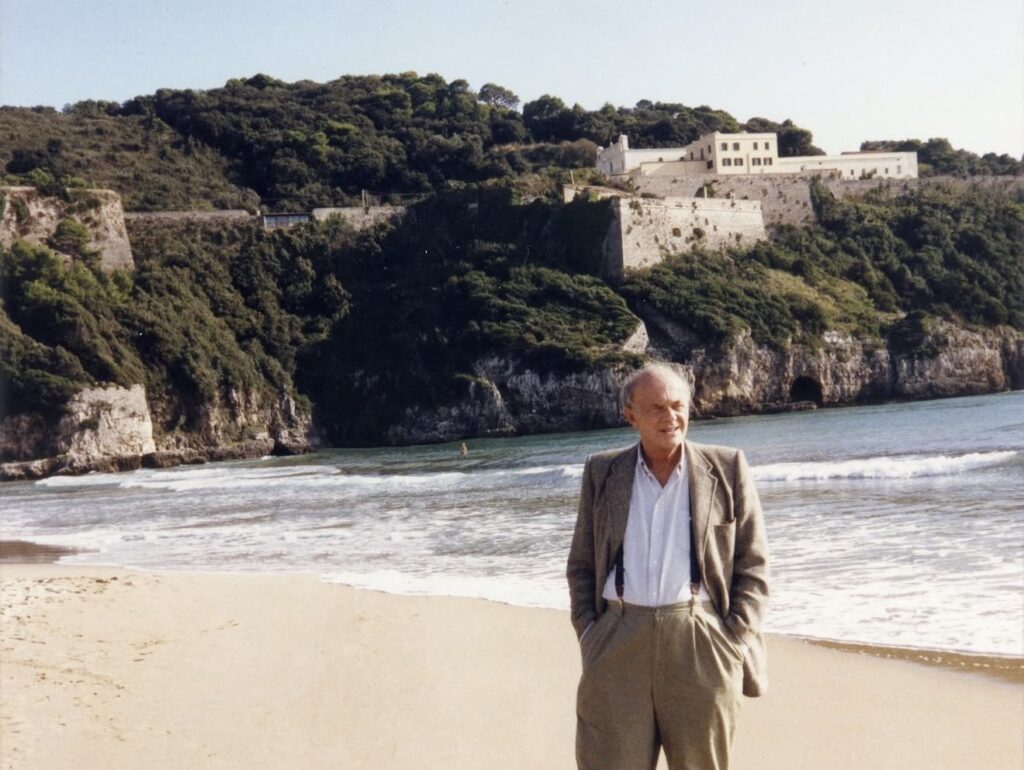
Cy Twombly (1928–2011) stands as one of the most consequential figures of postwar abstract art. Celebrated for a monumental body of work that deliberately resisted the rigid classifications of his era, Twombly spent six decades proving that this refusal of categories was the ultimate objective.
Best known for his monumental canvases layered with gestural marks, calligraphic scribbles, fragments of text, and references to ancient mythology, Twombly created a visual vocabulary that remains among the most recognizable in modern art. His work is held in the collections of major institutions worldwide, including the Museum of Modern Art, Whitney Museum of American Art, Solomon R. Guggenheim Museum, Tate Modern, Centre Pompidou, and the Menil Collection.
The Life and Artistic Development of Cy Twombly
Born in Lexington, Virginia, Twombly studied first at the School of the Museum of Fine Arts in Boston before moving to New York to attend the Art Students League. There he met Robert Rauschenberg, who encouraged him to enroll at Black Mountain College in North Carolina, then the most concentrated gathering of American avant-garde artists and thinkers working within a single institution.
Following military service as an Army cryptographer in the early 1950s, he developed an enduring fascination with coded systems, signs, and graphic notation that would later emerge in his paintings and drawings.After extensive travels throughout Europe and North Africa, Twombly settled in Rome in 1957. Italy became central to his artistic identity. Classical mythology, ancient literature, history, and Mediterranean culture informed much of his mature work, inspiring recurring references to figures such as Achilles, Venus, Apollo, and Sappho.
Major Series and Defining Periods
Twombly’s six-decade career is distinguished by several landmark bodies of work that remain foundational to the history of contemporary art.
The Blackboard Paintings
Created primarily between 1966 and 1971, the Blackboard paintings are among Twombly’s most celebrated achievements. Characterized by looping white wax-crayon marks drawn across gray grounds, these monumental canvases transformed repetitive gesture into a powerful form of visual rhythm. Today they remain some of the most sought-after works in the postwar market.
Fifty Days at Iliam
Completed in 1978 and housed permanently at the Philadelphia Museum of Art, Fifty Days at Iliam is widely regarded as Twombly’s masterpiece. Comprising ten monumental canvases inspired by Homer’s Iliad, the cycle explores themes of heroism, violence, memory, and loss through an extraordinary synthesis of text, abstraction, and mythological narrative.
Late Floral Paintings
During the 1990s and 2000s, Twombly produced a celebrated series of large-scale floral paintings. Dominated by expressive depictions of peonies, roses, and blooms rendered in sweeping gestures and vibrant color, these works demonstrated the artist’s continued ability to reinvent his visual language while maintaining the poetic sensibility that defined his career.
Why Cy Twombly Matters
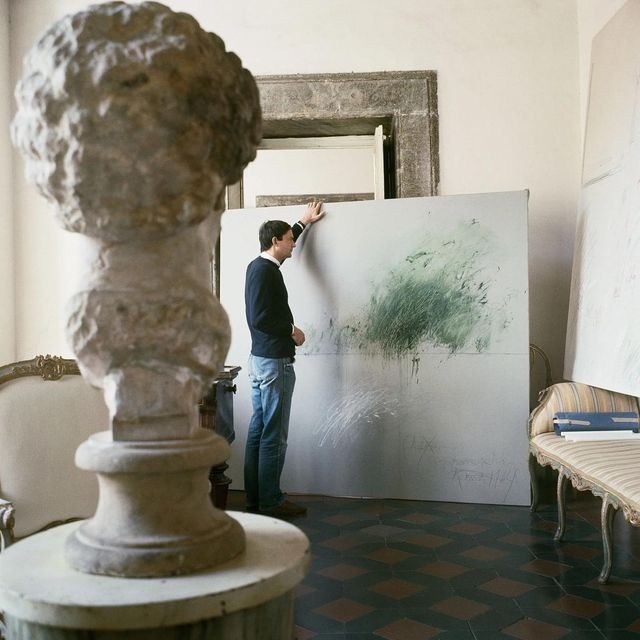
Few artists have bridged the worlds of classical antiquity and contemporary abstraction as successfully as Twombly. His work occupies a distinctive space between image and language, merging expressive mark-making with references to poetry, mythology, and history in ways that continue to shape contemporary artistic practice.
Initially embraced more readily in Europe than in the United States, Twombly’s reputation expanded steadily through a series of major museum exhibitions and scholarly reassessments. Today he is widely regarded as one of the defining artists of the postwar period.
Cy Twombly in the Art Market
The market for Cy Twombly remains one of the strongest and most established within the postwar category. Demand is driven by exceptional rarity, institutional validation, and the increasingly limited availability of major works.
His auction record was established in 2015 when Untitled (New York City) (1968), a landmark painting from the Blackboard series, sold for $70.5 million at Sotheby’s New York. Major paintings from the 1960s and 1970s remain among the most sought-after works in contemporary collecting, while drawings, prints, and works on paper continue to provide important entry points for private collectors.
As museum acquisitions and long-term private holdings continue to absorb significant examples, the supply of top-tier Twombly works available on the open market remains exceptionally limited.
Collecting Cy Twombly
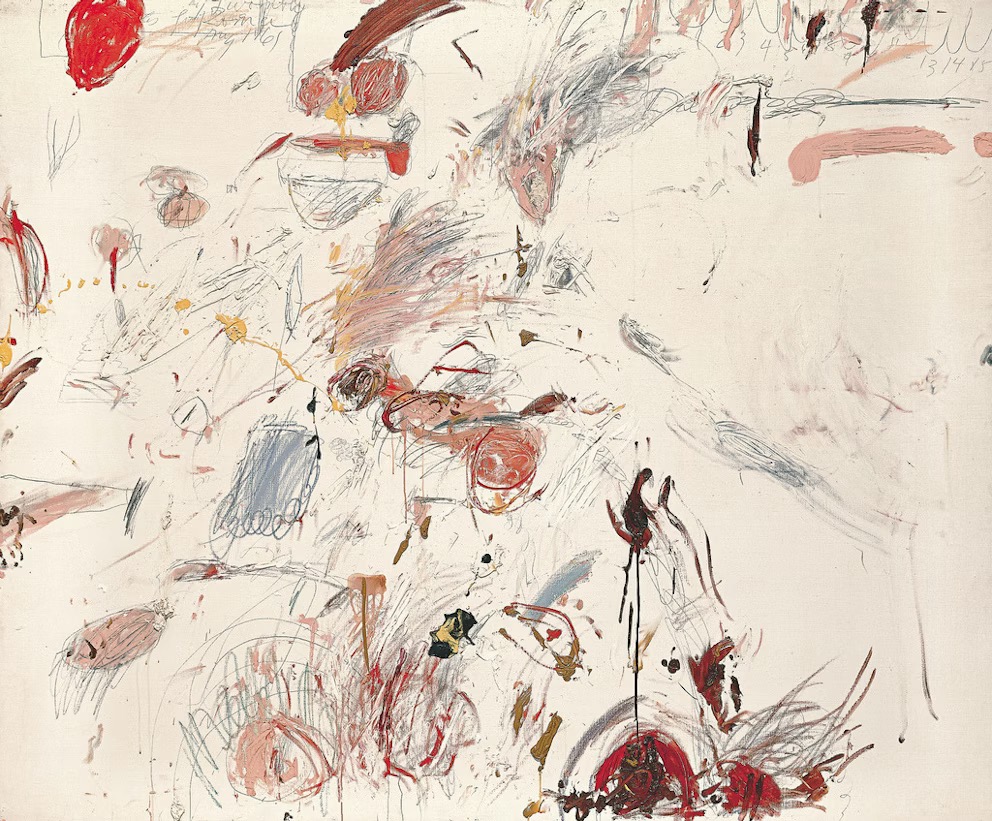
Collecting Cy Twombly requires careful consideration of period, medium, provenance, condition, and exhibition history. His oeuvre encompasses paintings, drawings, prints, and editions, with rarity and desirability varying across mediums and series.
While works on paper and editions offer a more accessible point of entry, collector demand at the highest level remains focused on major paintings from the 1960s and 1970s. As with any blue-chip artist, quality remains paramount. Works distinguished by strong provenance, museum exhibition history, and catalogue raisonné inclusion continue to command the greatest institutional and collector interest.
Gallery Ithaca advises collectors on acquisitions, private sales, collection management, and market strategy across the postwar and contemporary sectors. For inquiries regarding Cy Twombly works, contact info@galleryithaca.com.
Ithaca Gallery is a platform operating across the full spectrum of the art market. Subscribe to our newsletter to receive updates on upcoming exhibitions, market insights, gallery news, and more.