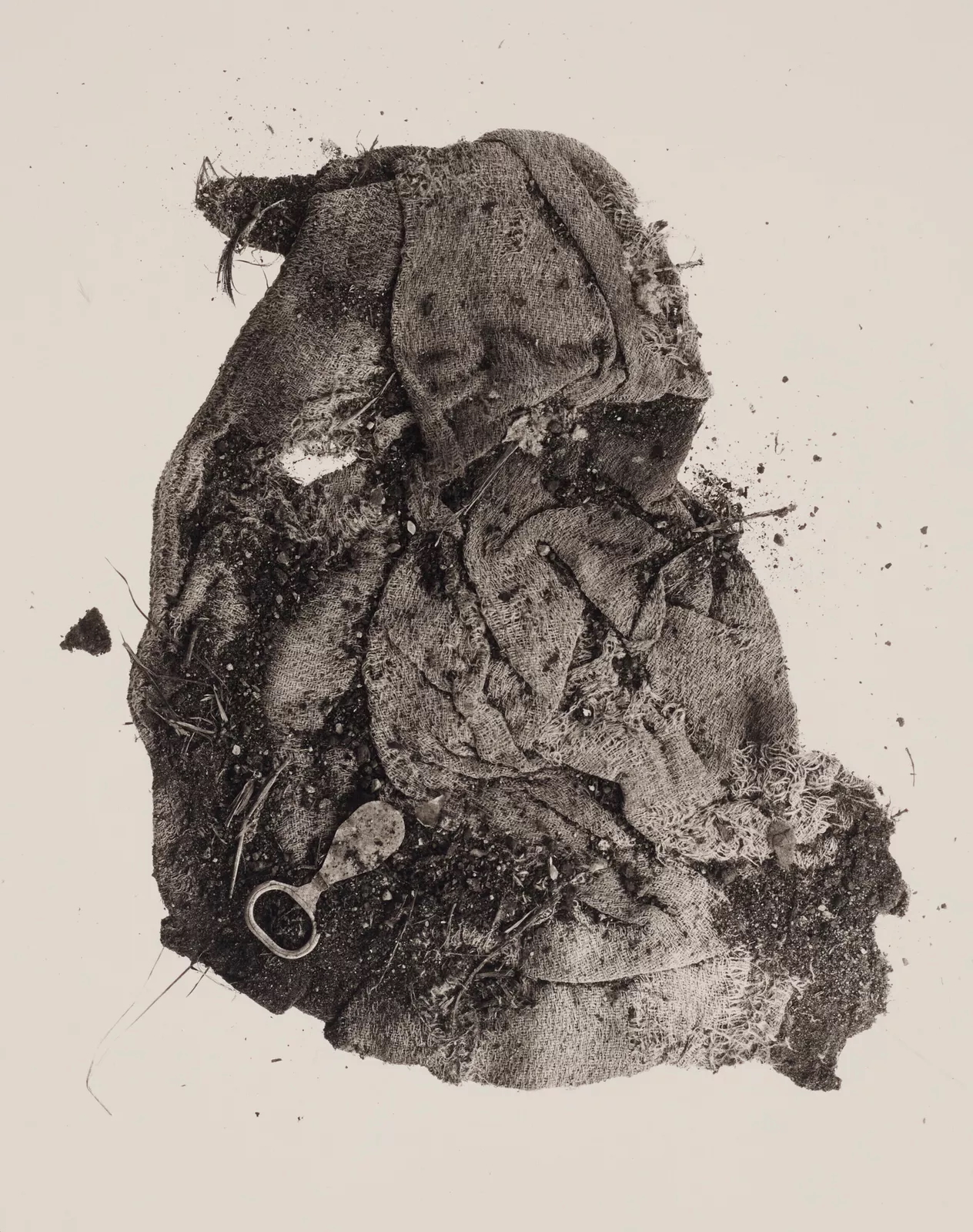
Jasper Johns
Jasper Johns (born 1930, Augusta, Georgia) is one of the most significant American artists of the twentieth century, whose work fundamentally transformed the relationship between representation, abstraction, and the act of looking. Moving to New York in the early 1950s following military service, he began in 1954 to make paintings of the American flag, a subject that asked viewers to confront the difference between seeing an object and seeing a painting of one, and in doing so helped lay the conceptual foundations for Pop Art, Minimalism, and Conceptual Art.
Working in encaustic, oil, and a range of other media including printmaking and etching, Johns produced a sustained body of work across flags, targets, numbers, maps, and letters, everyday images rendered with a density of surface and an intelligence of execution that repays sustained attention. His prints and etchings in particular stand among the most technically accomplished and conceptually rigorous works in the medium produced by any artist of his generation, extending the visual and intellectual concerns of his paintings into new territory with remarkable consistency. His first solo exhibition at the Leo Castelli Gallery in 1958 was a landmark moment in the history of American art. He was awarded the Grand Prize for Painting at the Venice Biennale in 1988 and the Presidential Medal of Freedom in 2011.
His work is held in the permanent collections of the Museum of Modern Art, New York, the Whitney Museum of American Art, the National Gallery of Art, Washington D.C., and Tate, London, and others.