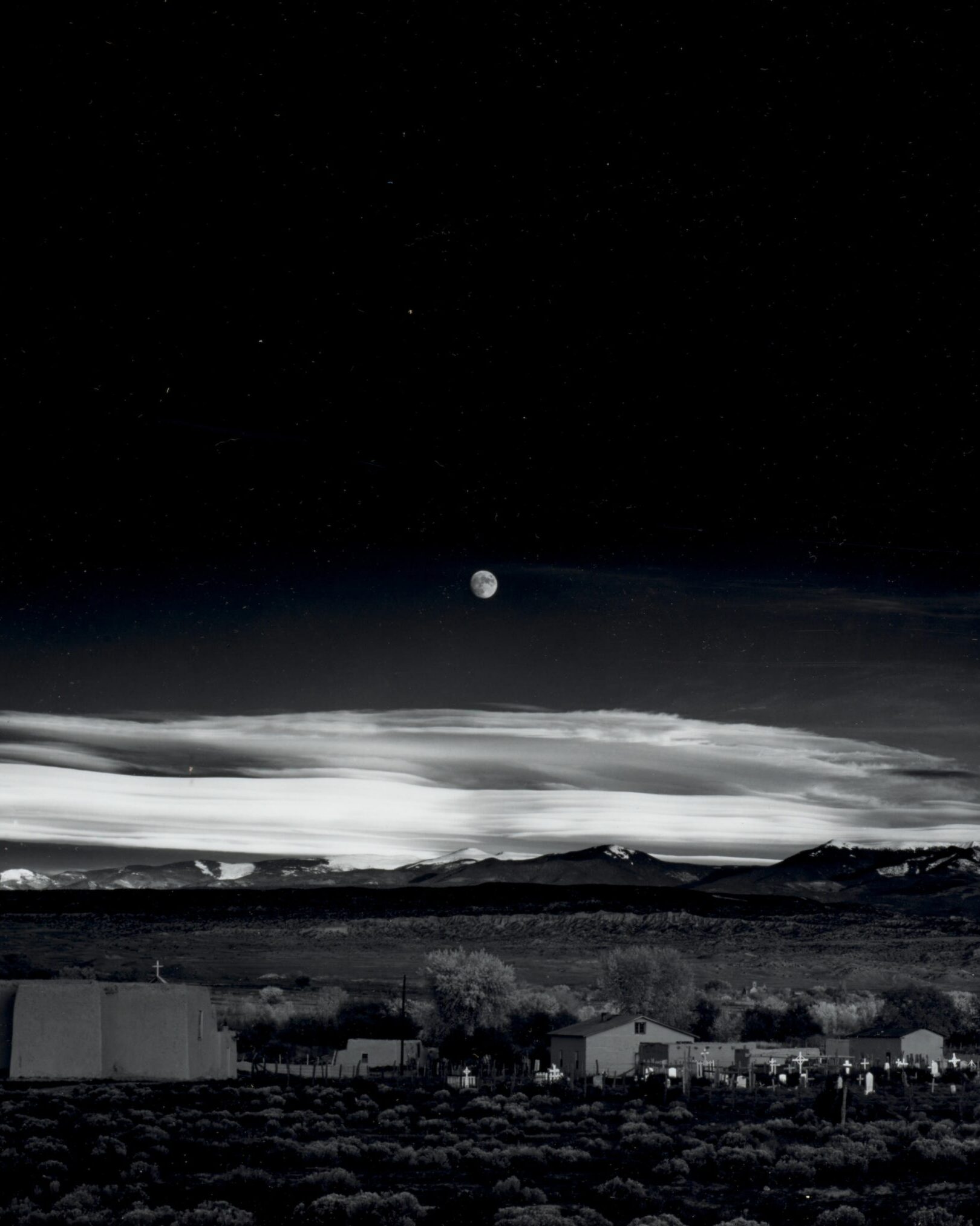
Ansel Adams
Ansel Adams (1902–1984, born San Francisco, California) was a photographer whose luminous, technically immaculate images of the American wilderness established him as the most celebrated landscape photographer of the twentieth century and one of the defining voices in the history of the medium. Initially trained as a concert pianist, Adams took up photography seriously in his early twenties following formative visits to Yosemite, which would become the subject of some of his most celebrated work and the landscape to which his name remains most closely associated.
In 1932 he co-founded Group f/64 with Edward Weston and Imogen Cunningham, a collective committed to sharp-focus, full-tonal-range photography that rejected the painterly soft-focus Pictorialism then prevalent in fine art photography. Adams later developed the Zone System, a methodical approach to exposure and darkroom technique that allowed photographers to pre-visualize the tonal qualities of a finished print with extraordinary precision. His work combined technical mastery with an almost spiritual attentiveness to light and landscape, producing images of the Sierra Nevada, Yosemite, and the American Southwest that have shaped how generations of viewers understand and relate to the natural world.
His photographs are held in the collections worldwide, including the Museum of Modern Art, New York, the Center for Creative Photography, Tucson, and the Library of Congress. He was awarded the Presidential Medal of Freedom in 1980.