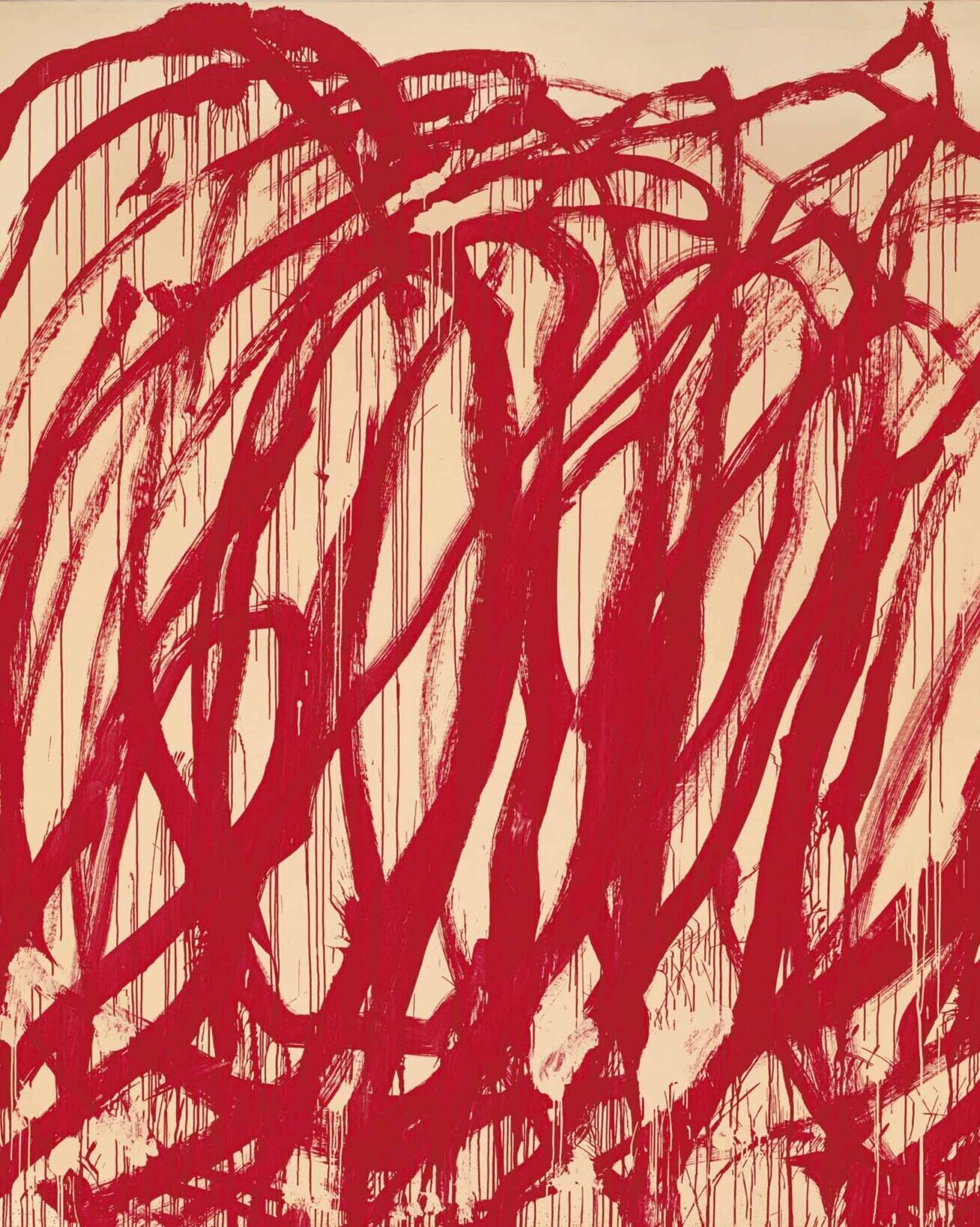
Cy Twombly
Cy Twombly (1928–2011, born Lexington, Virginia) was a painter, sculptor, and photographer whose synthesis of classical references, poetic allusion, and gestural abstraction produced one of the most distinctive and intellectually rich bodies of work in postwar art. Educated at the Art Students League of New York and Black Mountain College, where he formed lasting connections with Robert Rauschenberg, John Cage, and Merce Cunningham, Twombly made Rome his permanent home from 1957 onwards, a decision that proved fundamental to the character and content of his work.
Drawing on Greek and Roman mythology, the poetry of Keats, Rilke, and Mallarmé, and the sensory experience of the Mediterranean landscape, Twombly developed a practice of layered, allusive canvases on which scrawled text, lyrical marks, and fields of wax crayon and paint coexist in a visual language entirely his own. Works from his major cycles, including Fifty Days at Iliam (1978), now permanently installed at the Philadelphia Museum of Art, and the late Bacchus series, are among the most ambitious achievements of late twentieth century painting.
His work is held in the permanent collections of the Museum of Modern Art, New York, the Tate Modern, London, the Menil Collection, Houston, and the Cy Twombly Gallery at the Museum of Fine Arts, Houston.