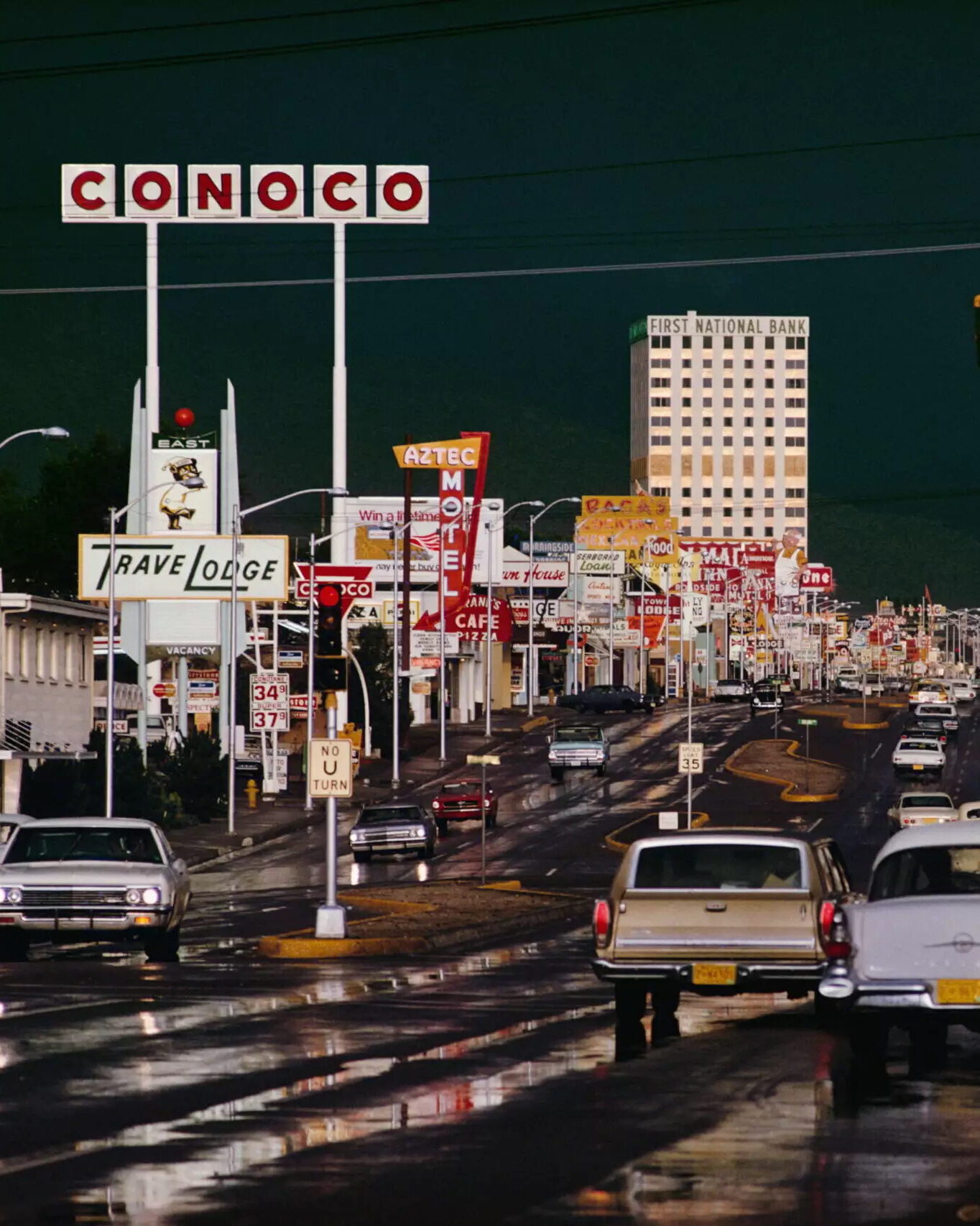
Ernst Haas
Ernst Haas (1921–1986, born Vienna, Austria) was a photographer and photojournalist whose pioneering work in color photography placed him at the forefront of a generation that transformed the medium from a primarily documentary tool into a vehicle for genuine artistic expression. Taking up the camera after the Second World War, his early black-and-white essays on the return of Austrian prisoners of war attracted the attention of Life magazine and led to an invitation from Robert Capa to join Magnum Photos in 1949, where he developed close associations with Capa, Henri Cartier-Bresson, and Werner Bischof.
Moving to the United States in 1951, Haas began experimenting with Kodachrome color film at a moment when color was widely dismissed by the photographic establishment as a commercial rather than an artistic medium. His 1953 color photo essay on New York City, published across twenty-four pages in Life, was the first such large-scale color feature the magazine had published and demonstrated that color could carry the same emotional weight as black and white. Working across landscape, motion, abstraction, and portraiture for publications including Life, Vogue, Look, and Holiday, Haas brought to color photography a painterly sensibility and a command of light and movement that set his work apart from his contemporaries.
He was awarded the Hasselblad Award in 1986, shortly before his death. His work is held in collections internationally, with a major archive housed at the Portland Museum of Art in Maine.