Mark Rothko
Mark Rothko (1903–1970, born Daugavpils, Latvia, then part of the Russian Empire) was a painter whose mature work established one of the most sustained and emotionally resonant bodies of abstract painting of the twentieth century. Emigrating with his family to the United States in 1913, he eventually settled in New York, where he became a central figure in the development of Abstract Expressionism alongside Jackson Pollock, Willem de Kooning, and Barnett Newman.
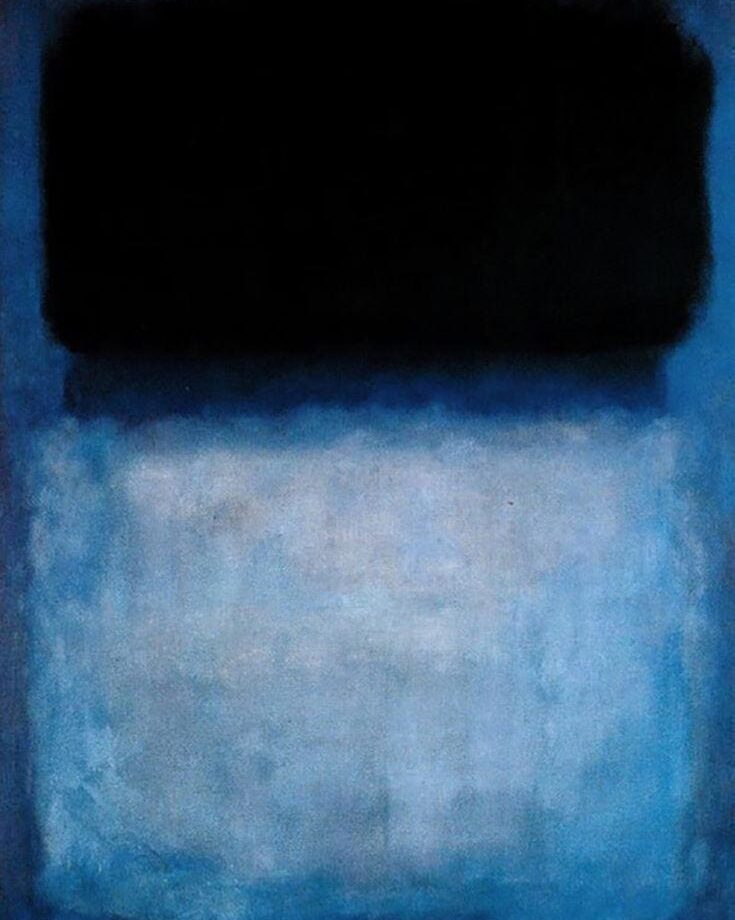
By the early 1950s, Rothko had arrived at his signature format: large vertical canvases bearing two or three softly edged, luminous rectangles of colour hovering against a painted ground. Though abstract in form, these works were conceived as vehicles for direct emotional experience, addressing what Rothko described as fundamental human conditions of tragedy, ecstasy, and transcendence. Major commissions followed, including fourteen paintings for the Rothko Chapel in Houston, a non-denominational space that opened in 1971 and remains one of the most significant permanent installations in American art.
His work is held in the collections of the Museum of Modern Art, New York, Tate Modern, London, the National Gallery of Art, Washington D.C., and the Museo Nacional Thyssen-Bornemisza, Madrid. Rothko died in his studio in New York in 1970.