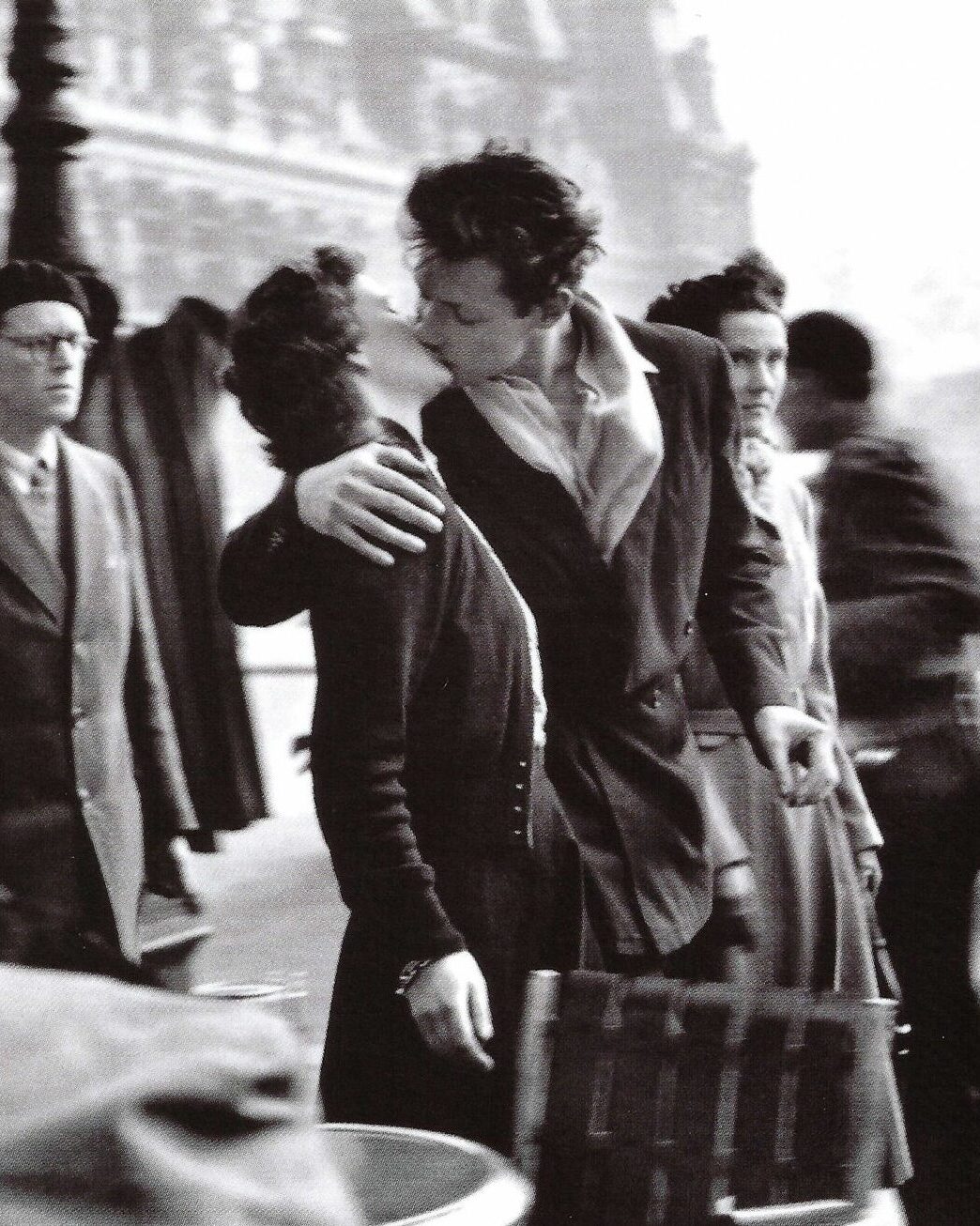
ROBERT DOISNEAU
Robert Doisneau (1912–1994, born Gentilly, France) was a French photographer whose humanist vision of Parisian street life produced some of the most beloved and enduring images in the history of photography. Trained as a lithographer at the École Estienne in Paris, he turned to photography in the early 1930s and worked briefly as an industrial photographer for Renault before being dismissed for chronic lateness, a consequence of his compulsive need to photograph the street life of the city around him. He joined the Rapho agency in 1946, which would represent him for the rest of his career, and his photographs were published widely in Life, Paris Match, and Vogue throughout the post-war decades.
His 1950 photograph Le Baiser de l’Hôtel de Ville, showing a couple kissing on a busy Paris street, became one of the most reproduced photographs of the twentieth century and an enduring symbol of Parisian romance, though it was later revealed to have been staged. Doisneau’s practice was defined by a tender affection for the ordinary people of Paris, in particular the working-class inhabitants of the city’s suburbs and the artisans, children, and street performers of Montmartre and the Left Bank. His technical command was matched by a gift for human observation that allowed him to find poetry in the unremarkable details of everyday life.
His work is held in the permanent collections of the Bibliothèque Nationale de France, Paris, and the Museum of Modern Art, New York, among many others. He was awarded the Prix Niepce in 1956 and the Grand Prix National de la Photographie in 1983.