Photography
Lucio Fontana
Italian-Argentine · 1899–1968
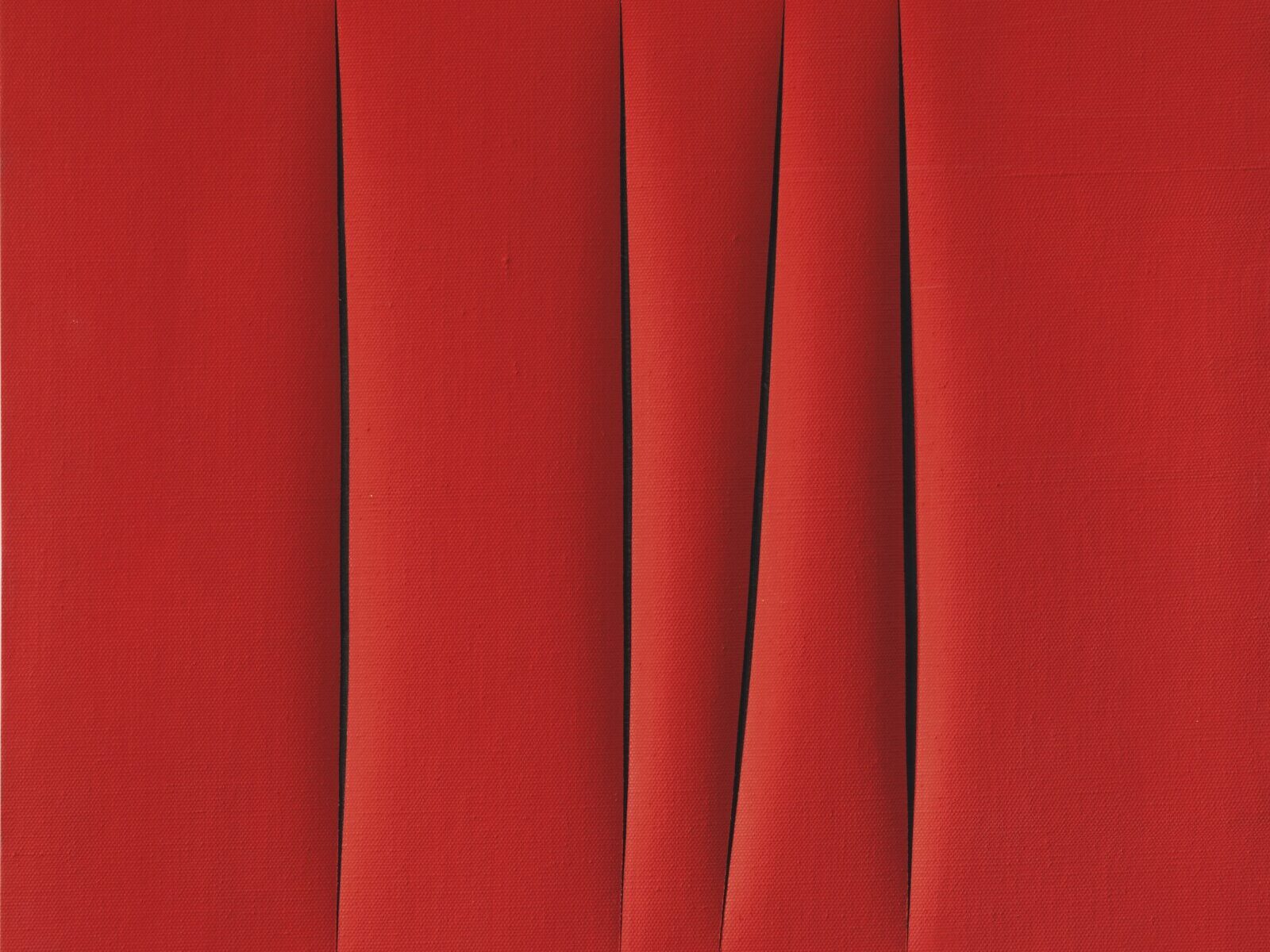
Lucio Fontana (1899–1968, born Rosario, Santa Fe, Argentina) was an Argentine-Italian sculptor, painter, and theorist whose radical rethinking of the painted surface fundamentally changed the terms of postwar art. The founder of Spatialism, a movement concerned with the integration of color, sound, space, and time into a unified aesthetic experience, Fontana developed his most celebrated practice in the late 1950s when he began puncturing and slashing his canvases, creating what he called Concetti Spaziali, or Spatial Concepts.
These works, known as the Tagli and Buchi series, treated the picture plane not as a surface for representation but as a physical object to be penetrated, revealing the space behind it and introducing a new relationship between painting, sculpture, and the void. Educated at the Brera Academy in Milan, Fontana moved between Argentina and Italy throughout his career, eventually settling permanently in Milan, where his studio became a gathering point for postwar avant-garde thought. His influence on subsequent generations of artists, from Arte Povera to Minimalism and beyond, has been profound and lasting.
His work is held in the collections of the Museum of Modern Art, New York, the Tate Modern, London, and the Guggenheim Museum Bilbao.