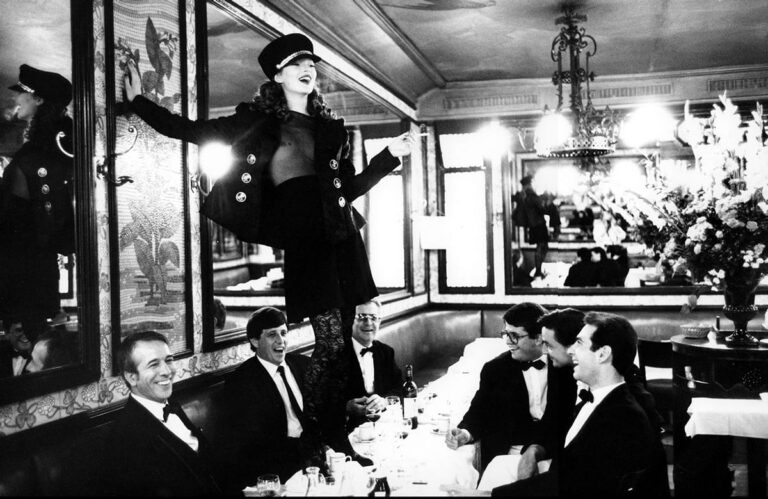
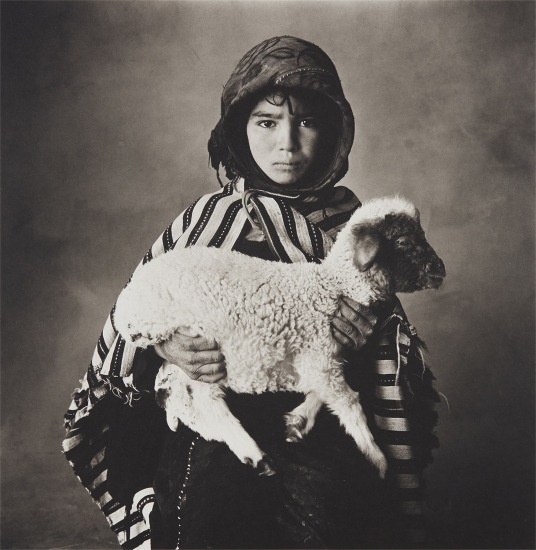
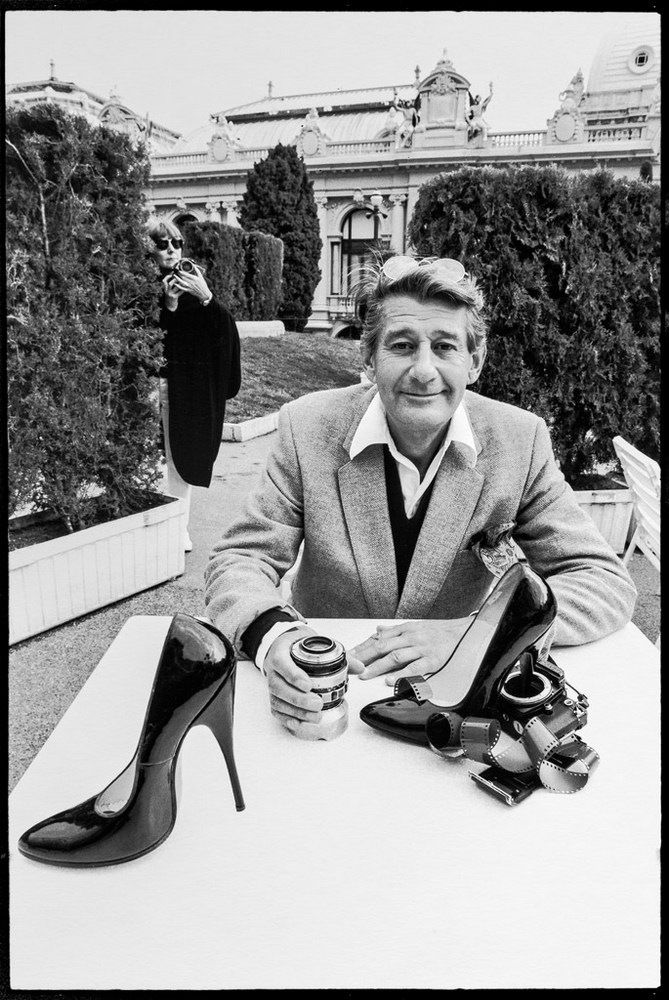
Helmut Newton (1920–2004) was one of the most influential photographers of the twentieth century, whose provocative vision reshaped both fashion photography and the art of the nude. Working in a bold, cinematic black and white, he photographed women as powerful, commanding presences and blurred the boundaries between fashion, portraiture, and eroticism, in images that remain among the most recognizable of their era.
The Life and Work of Helmut Newton
Newton was born Helmut Neustädter in Berlin in 1920, into a prosperous Jewish family. He received his first camera at twelve and, at sixteen, began an apprenticeship with Yva, among the most celebrated fashion and portrait photographers of Weimar Berlin. The rise of the Nazi regime brought that apprenticeship to an end. Fleeing Germany in 1938, in the weeks after Kristallnacht, he made his way to Australia by way of Singapore, served in the army, became a citizen, and took the surname Newton.
In Melbourne, he opened his first studio and married the Australian actress June Browning, who became known professionally as the photographer Alice Springs. She developed a distinguished photographic career of her own and remained Newton’s partner throughout his life. A contract with British Vogue took him to London at the end of the 1950s, but it was his move to Paris in 1961, and his long association with French Vogue, that gave his work its defining character. Over the decades that followed, his photographs filled the leading magazines of the day, from Vogue and Elle to Stern and Playboy, and he became a portraitist of many of the century’s defining figures.
His mature vision took shape through a succession of landmark books. White Women, his first monograph, appeared in 1976 and received the Kodak Photo Book Award; Sleepless Nights followed in 1978; and in 1980–81 came the Big Nudes, the monumental, near life-size studies that remain the work most closely identified with his name. In 1981 he made Sie Kommen, or They Are Coming, the celebrated sequence in which the same models appear first clothed and then nude in identical poses. His achievement was brought together late in his career in SUMO, published by Taschen in 1999. The monumental volume contained more than 400 photographs spanning four decades of his work.
Why Newton’s Work Endures
Newton’s enduring influence rests on a double transformation: he expanded the possibilities of fashion photography while radically altering the way women could be represented within it. He moved fashion imagery beyond the conventional studio and into a cinematic world of grand hotels, empty streets, swimming pools and private interiors, shaped by hard, exacting light and the charged atmosphere of film noir. As his vision matured it turned increasingly to the nude, and to the themes of power, sexuality, and provocation that would blur the boundaries between fashion, portraiture, and eroticism.
At the heart of that achievement stand the women. Newton’s subjects do not submit to the camera so much as command it, tall, assured, and physically imposing, meeting the viewer on their own terms. His practice was a deliberate reversal of the conventional relationship between photographer and female subject, and for all its provocation it remained exactingly composed and controlled.
Helmut Newton in the Market
Newton is among the most established names in the photography market. His auction record was set at Christie’s in New York in 2022, when a large-format print of Big Nude III (Variation), Paris, one of his signature nudes, sold for $2,340,000, a world record at auction for the photographer.
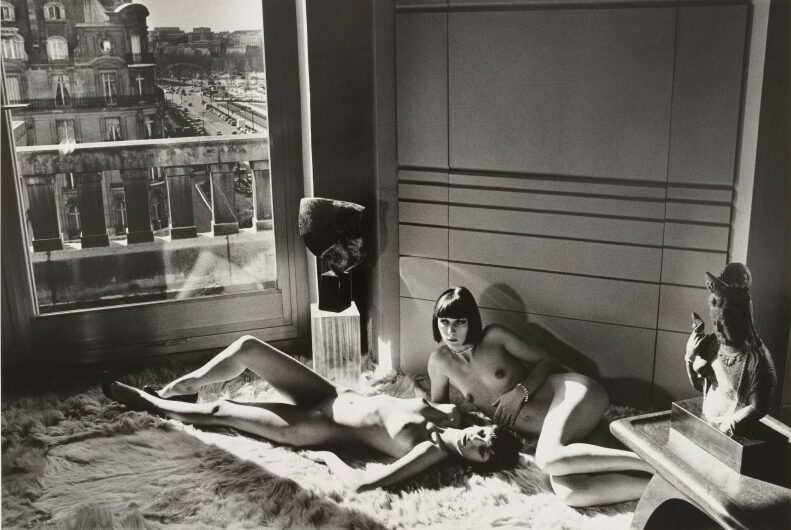
Since Newton’s death, his legacy has been held by the Helmut Newton Foundation in Berlin, which he established in 2003. The Foundation holds his archive alongside that of June Newton and stands as the principal authority on his work. Decades on, Newton’s work continues to provoke debate about power, sexuality and representation. That ongoing conversation, together with the strength of his institutional and market presence, has ensured that his photographs remain firmly within the canon of twentieth-century photography. His work is held in major museums, private collections, and institutions worldwide.
Collecting Helmut Newton
Speak with an Ithaca advisor for available works by Helmut Newton. Every acquisition is handled privately. Contact Us.