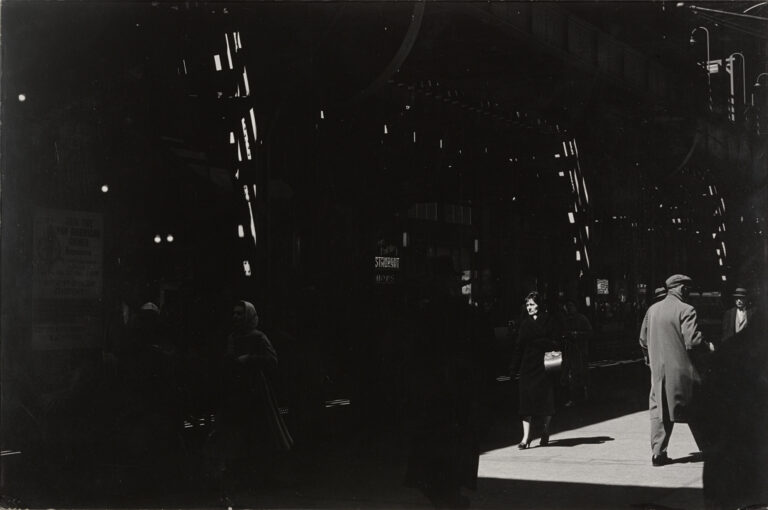
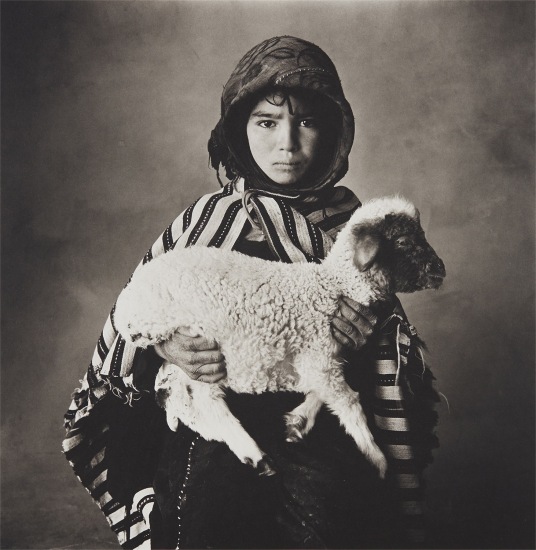
“I came in as an outsider, a witness bent on keeping the record, but over time I began to feel a part of the very project I’d been intent on recording.”
Joel Meyerowitz
Twenty-five years ago today, on September 11, 2001, two planes were flown into the North and South Towers of the World Trade Center in New York; a third struck the Pentagon in Arlington, Virginia; and a fourth crashed in a field near Shanksville, Pennsylvania, in the deadliest terrorist attack in American history. In total, 2,977 people were killed: 2,753 at the World Trade Center, 184 at the Pentagon, and 40 aboard United Airlines Flight 93.
The scale of the attacks has long since entered the historical record, but September 11 remains, above all, a history of individual lives. For the families who lost loved ones, the significance of that morning was never measured in statistics, but in the absence of a person who should have returned home that evening and in the uncertainty and grief that followed. At the World Trade Center, the attacks were followed by the largest emergency response in New York City’s history and nine months of recovery work at Ground Zero. Firefighters, police officers, construction workers, engineers, volunteers and others worked through the remains of the site to recover the deceased and clear the enormous volume of debris.
Joel Meyerowitz arrived back in New York determined to contribute to that effort in the way he knew best. A New York native, Meyerowitz was staying on Cape Cod when his wife called him on the morning of September 11 and told him to turn on the television. Once he understood what had happened, his response was immediate: “Oh, my city was just attacked,” he recalled in a recent interview with The Art Newspaper. “I mean, what could I do to help?”
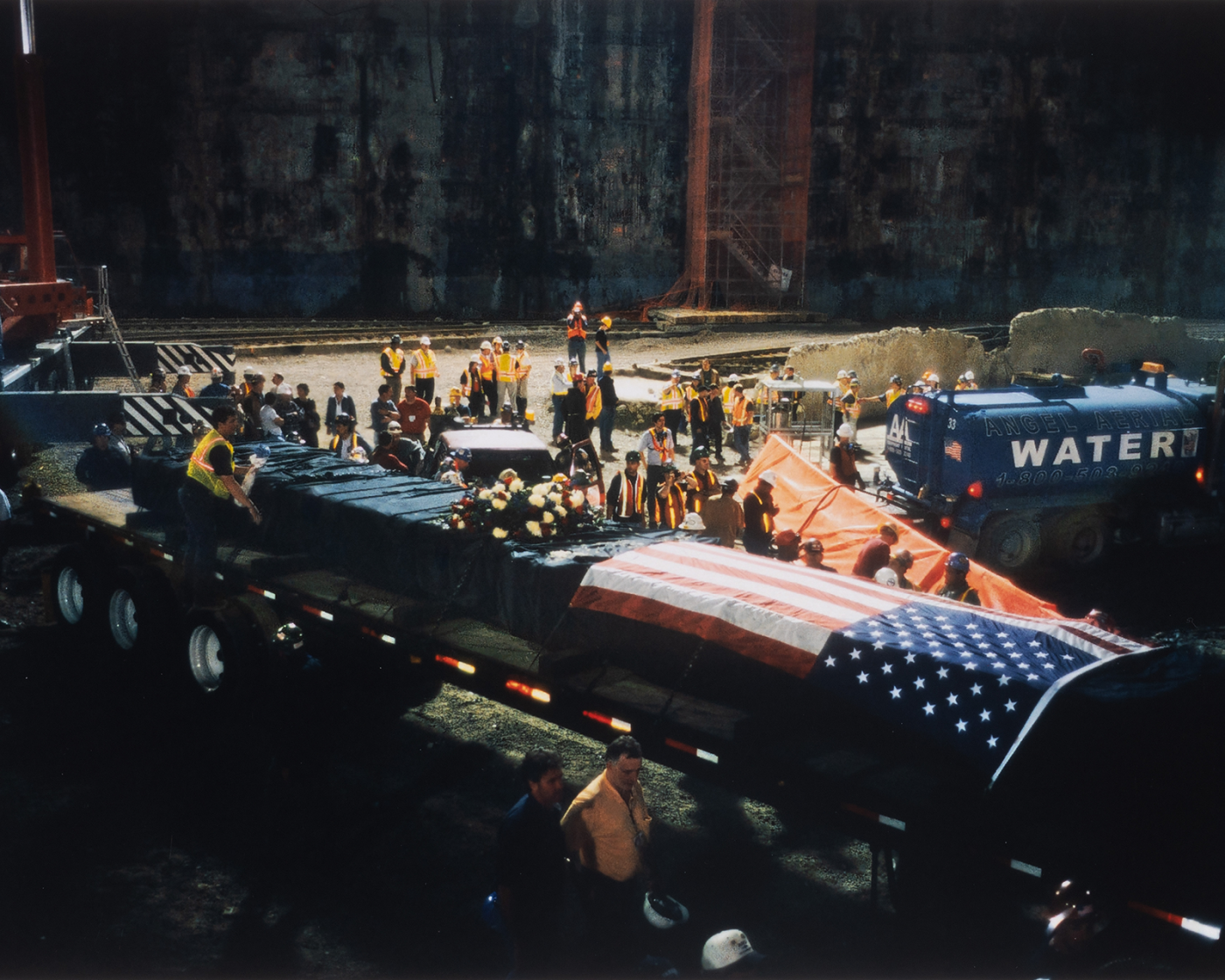
Meyerowitz had photographed the World Trade Center for years before the attacks, including from his studio in Manhattan. When he returned to the city, however, Ground Zero was a secured crime scene and photography at the site had been prohibited. He nevertheless felt compelled to document what was happening there. “I had something else to give and I couldn’t figure out what it was,” he told The Art Newspaper. “I knew I had to be inside.”
Gaining access was not straightforward. Meyerowitz established relationships with members of the New York Police Department and others working at Ground Zero, and in time he became the only photographer granted unimpeded access to the site. For nine months he returned as the wreckage was removed, the excavation advanced and the footprint of the World Trade Center was gradually cleared. The resulting body of work, Aftermath, traces both the destruction and the long labor of recovery, and was later exhibited internationally through the United States Department of State, reaching more than 200 cities in 60 countries.
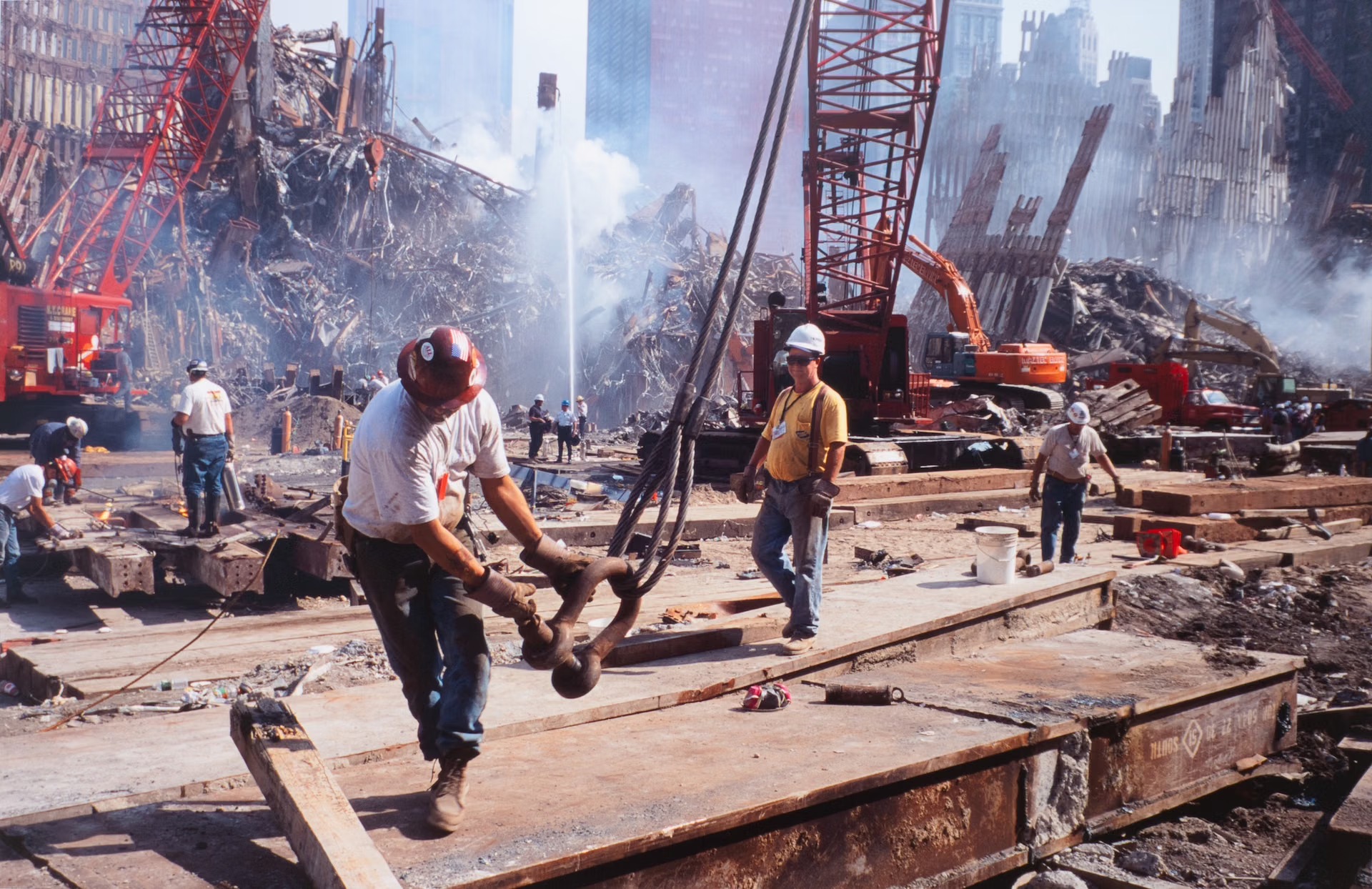
What stayed with Meyerowitz most powerfully was the scale of the destruction and, above all, the care and dedication with which the recovery was carried out. In his recent conversation with The Art Newspaper, he recalled men and women working on their hands and knees through the debris, searching for anything that might help establish the identity of those who had died: “A tooth, a belt buckle, a bone, some kind of information, a wallet, anything.” He described “the devotion of all those men and women” and the extraordinary importance placed on establishing the identity of every individual recovered from the site. “The singularity and individuality of each person was held to such a high standard,” he said. Meyerowitz has described his decision to undertake the project as “a calling.” His photographs became an important record of a city confronting the physical remains of the attacks and of the people who carried out the difficult work that followed.
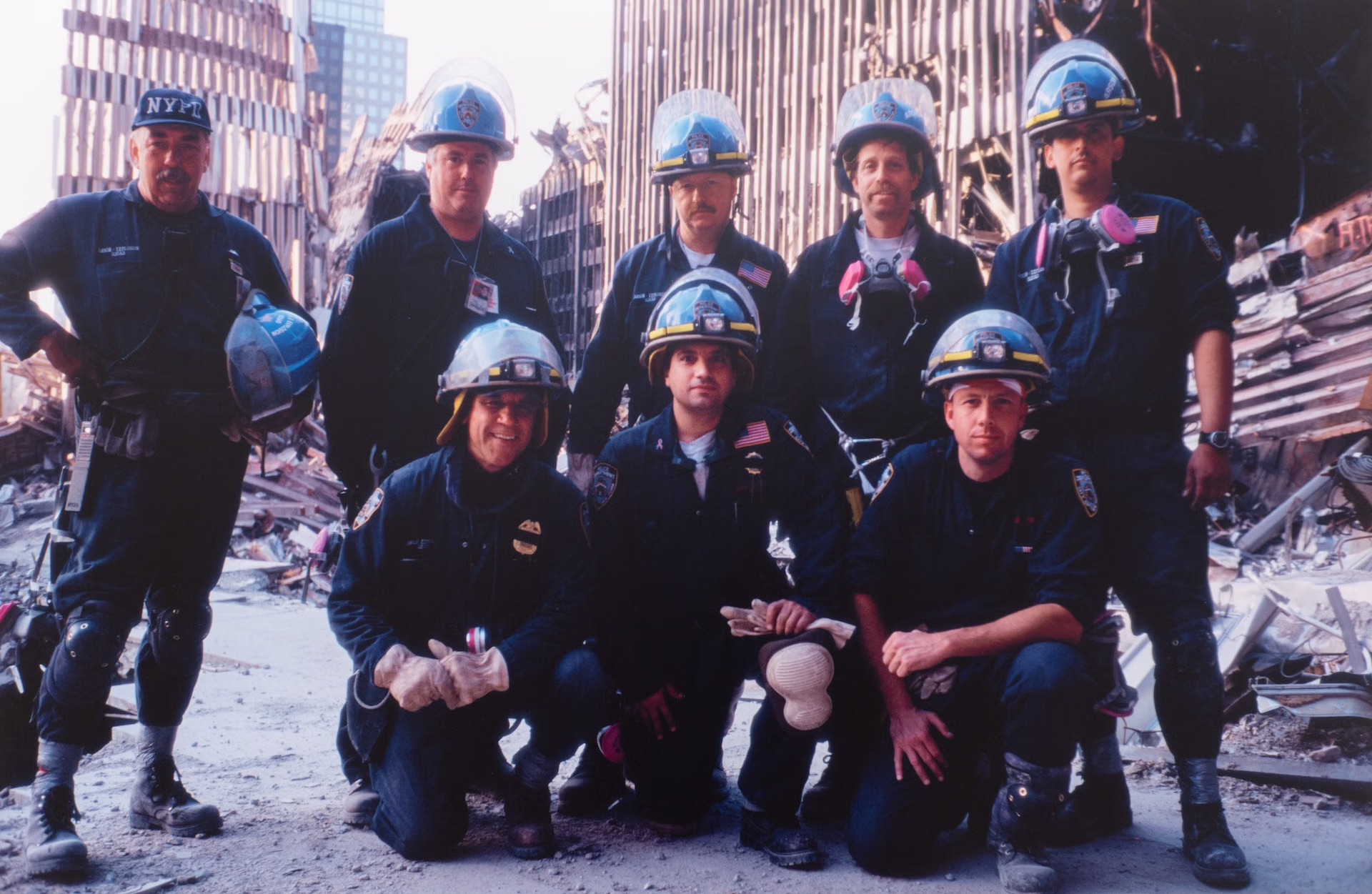
Twenty-five years later, the importance of that record is also connected to the changing nature of memory. For those who experienced September 11 as adults, the day remains part of lived memory. For a generation born afterward, it is history encountered through family accounts, memorials, archival records and the institutions responsible for preserving them. The National September 11 Memorial & Museum continues to document the lives of those killed and the experiences of survivors, families, first responders and recovery workers, ensuring that the history of the attacks extends beyond the events of a single morning.
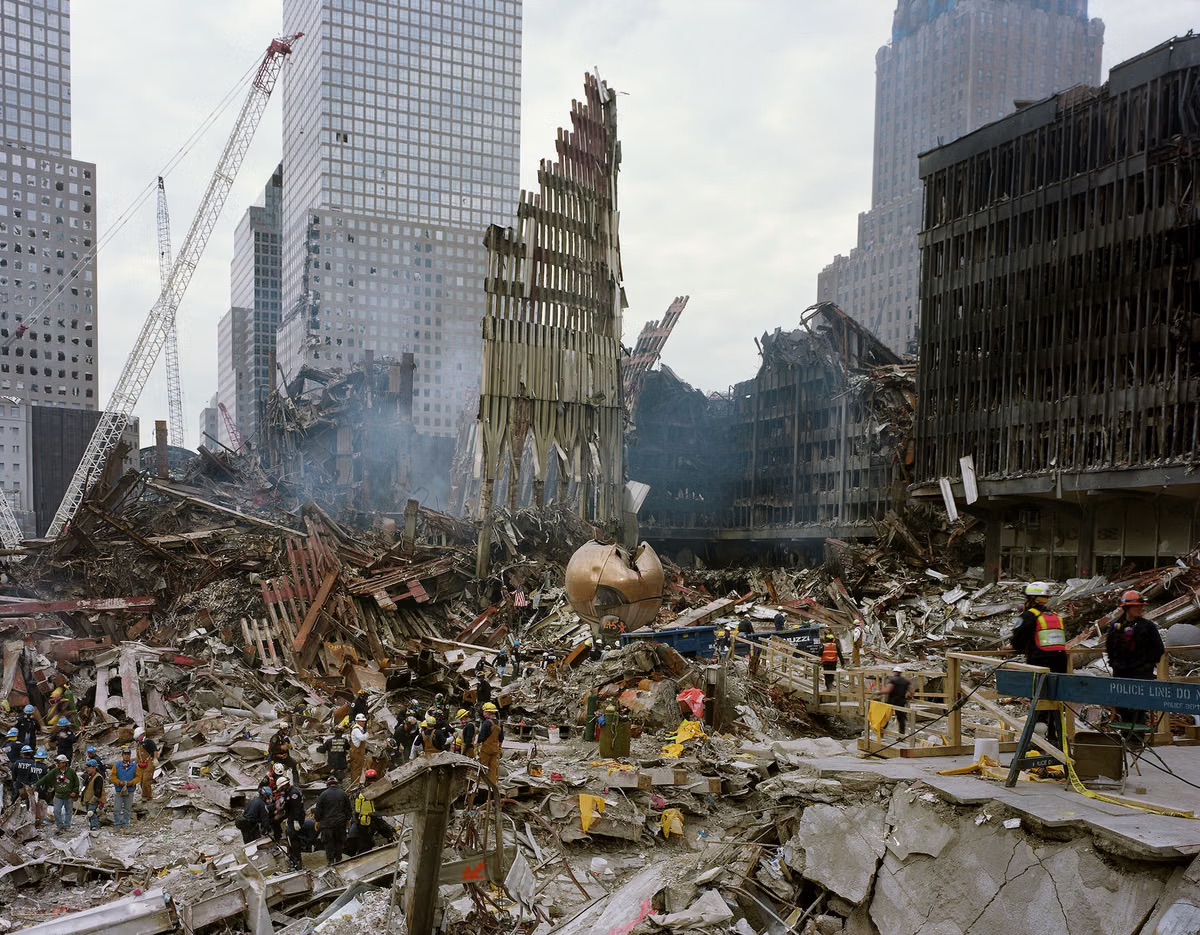
The World Trade Center site itself has since been transformed. The National September 11 Memorial now occupies the footprints of the Twin Towers, while the surrounding district has been rebuilt as a major center of Lower Manhattan. Yet the physical changes to the site have not diminished the significance of what occurred there, nor the lives of the people whose names are inscribed at the Memorial.
Aftermath invites us to remember September 11 and the months that followed: the recovery workers who entered the ruins, the families who waited for answers, and the painstaking effort to identify and account for those who had been lost. Meyerowitz’s photographs preserve that period with equal attention to the scale of the destruction and the humanity of those who worked within it.
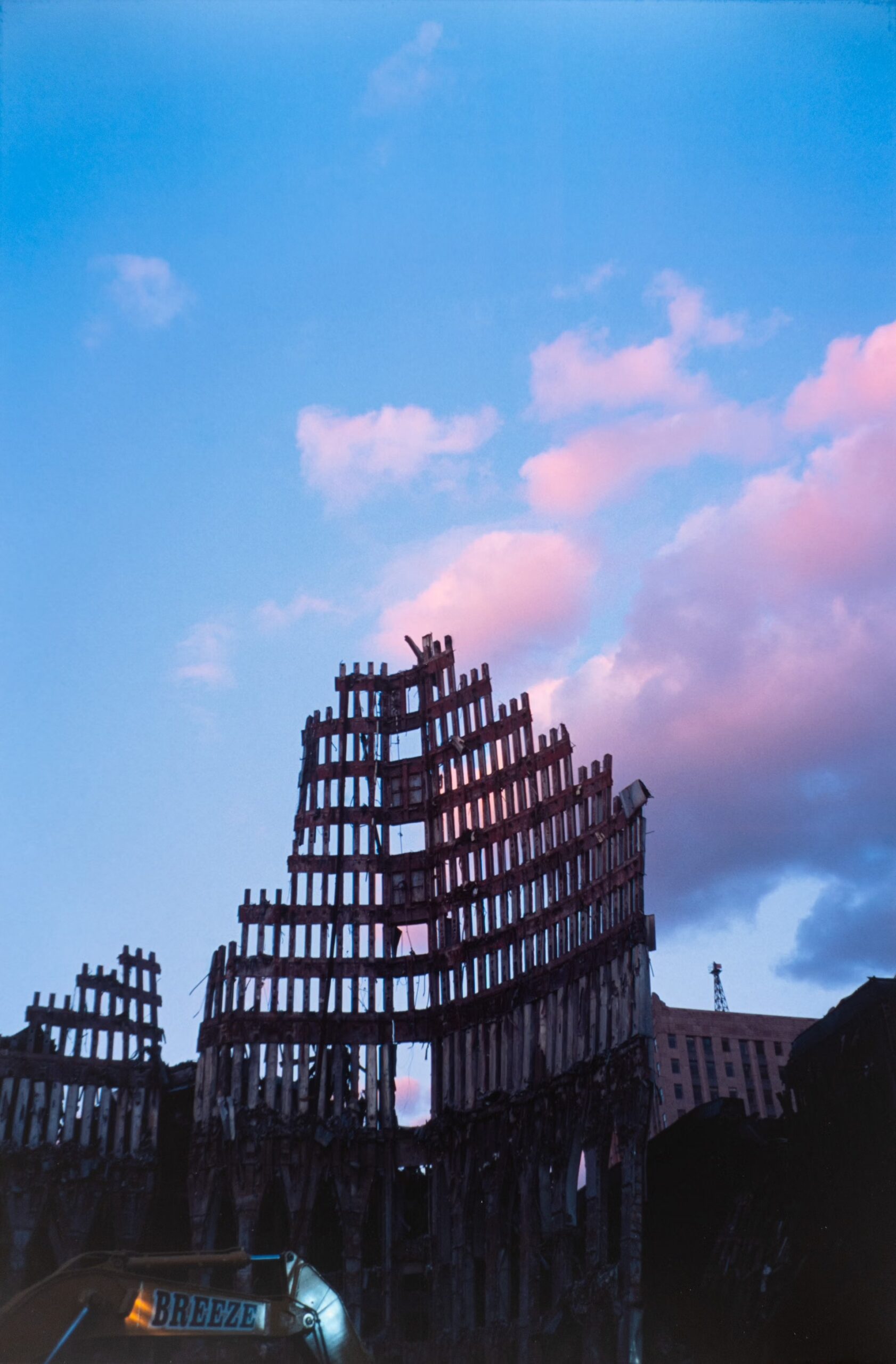
Today we honor the 2,977 people killed on September 11, 2001, and remember their families, friends and communities, along with the survivors, first responders and recovery workers whose lives were forever changed. Twenty-five years later, preserving their stories and remembering them with accuracy, dignity and care remains an enduring responsibility.