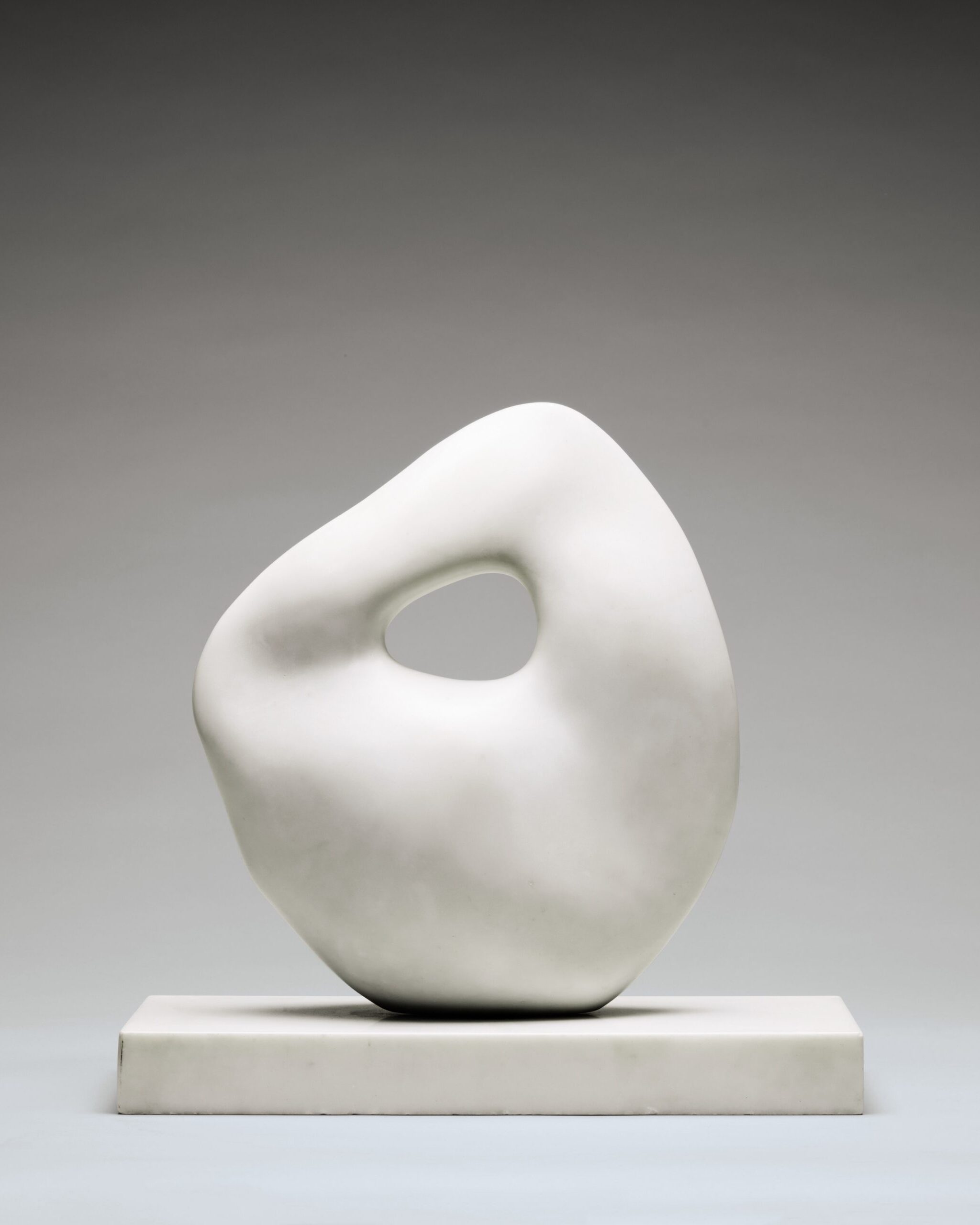
Henry Moore
Henry Moore (1898–1986, born Castleford, Yorkshire, England) was a sculptor whose biomorphic, monumental forms established him as the most internationally celebrated British sculptor of the twentieth century. Drawing early inspiration from pre-Columbian sculpture and the work of Constantin Brancusi, Moore developed a formal language of simplified, hollowed, and interlocking forms that bore the influence of Surrealism while remaining rooted in a sustained engagement with the human figure, natural landscape, and the qualities of sculptural material.
His Reclining Figure series, begun in the 1930s and continued throughout his career, became the defining expression of his vision, the recumbent body dissolving into an abstract landscape of mass and void that seemed to belong simultaneously to flesh, stone, and hill. His wartime drawings of Londoners sheltering in Underground stations during the Blitz brought him widespread public recognition and remain among the most affecting documents of civilian life in wartime Britain. Major public commissions followed, placing his work in prominent spaces across Europe and North America.
His work is held in the permanent collections of Tate Modern, London, the Museum of Modern Art, New York, and the Henry Moore Foundation in Hertfordshire, which maintains the most comprehensive archive of his sculpture, drawings, and prints