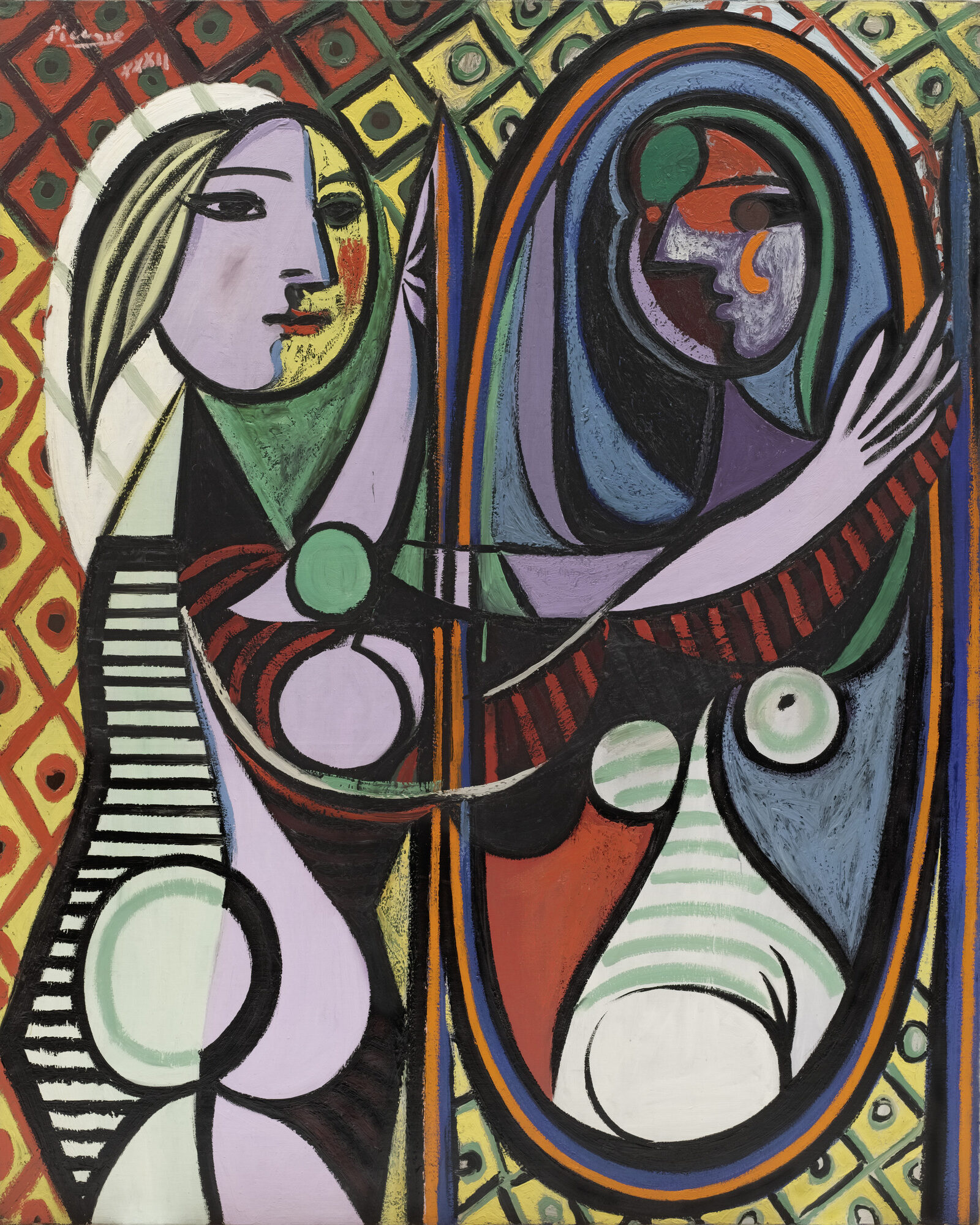
Pablo Picasso
Pablo Picasso (1881–1973, born Málaga, Spain) was the most influential visual artist of the twentieth century, whose extraordinary range, longevity, and formal invention shaped the course of modern art across painting, sculpture, printmaking, and ceramics. His early development produced two of the most emotionally distinctive bodies of work in modern painting: the Blue Period (1901–1904), characterised by cold, monochromatic palettes and subjects drawn from poverty and human vulnerability, and the Rose Period (1904–1906), in which warmer tones and imagery drawn from circus performers gave way to a more lyrical, tender sensibility.
Moving to Paris in 1904, he became the central figure of the Parisian avant-garde, and his co-invention of Cubism with Georges Braque between 1907 and 1914 remains the most radical reimagining of pictorial space in the history of Western art. His career spanned over seven decades of uninterrupted production, moving through Cubism, Neoclassicism, and Surrealism with a restlessness that consistently defied categorization, producing major works including Les Demoiselles d’Avignon (1907), Guernica (1937), and the Weeping Woman series (1937).
His work is held in virtually every major museum collection in the world, with the Musée Picasso in Paris and the Museu Picasso in Barcelona maintaining the most comprehensive holdings. He remained productive to the end of his long life, dying in Mougins, France at the age of ninety-one.