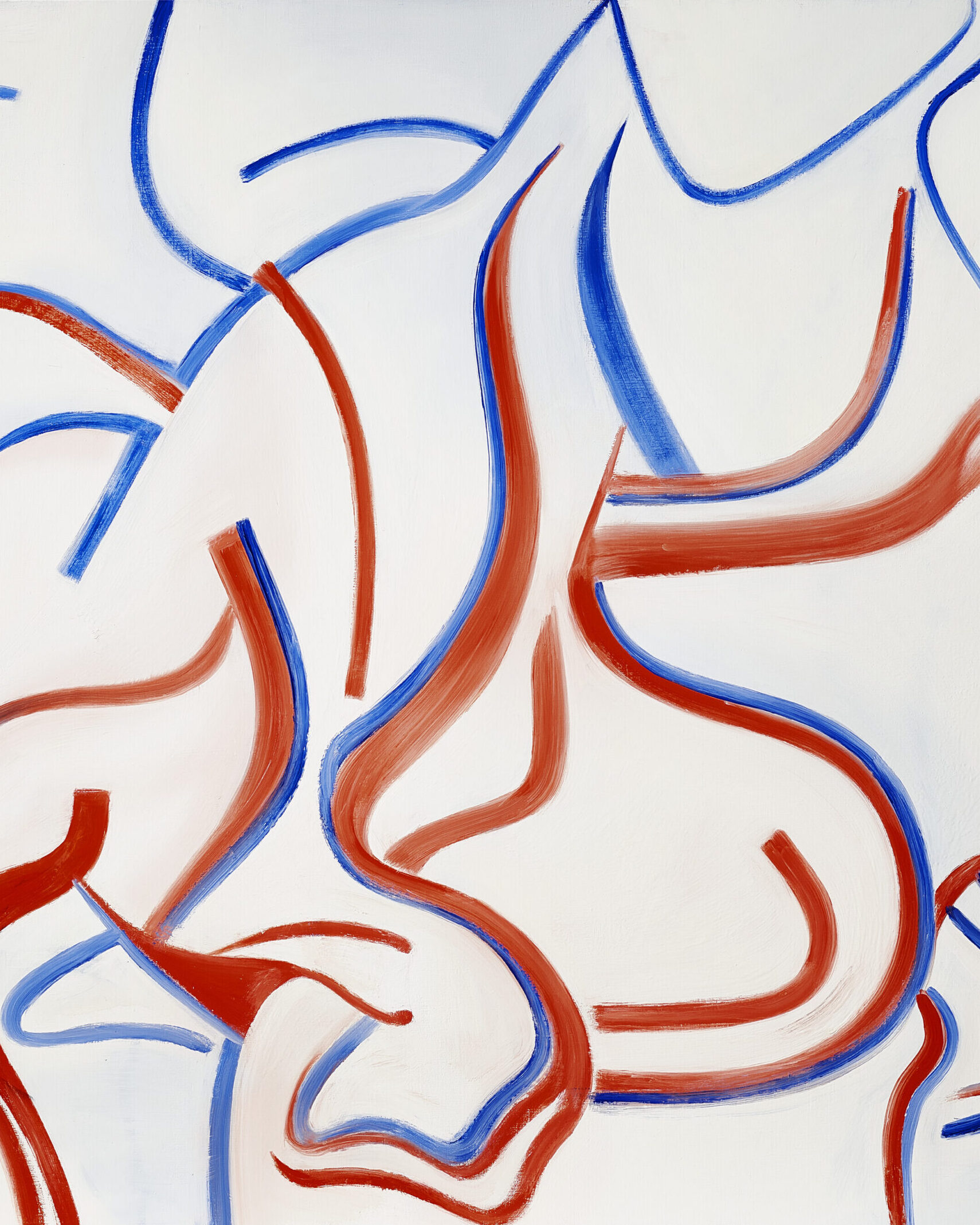
Willem de Kooning
Willem de Kooning (1904–1997, born Rotterdam, the Netherlands) was one of the leading figures of Abstract Expressionism and among the most consequential painters of the twentieth century. Stowing away on a ship bound for the United States in 1926, he settled in New York, where he formed close friendships with Arshile Gorky and other artists who would collectively shift the centre of the avant-garde from Paris to New York in the years following the Second World War.
De Kooning worked simultaneously in abstract and figurative modes throughout the late 1930s and 1940s, a tension that produced some of his most important early work. His first solo exhibition, held at the Charles Egan Gallery in 1948, established him as a major force in American painting. In 1953, his notorious series of Women paintings, with their aggressive, fragmentary treatment of the female figure, provoked intense critical debate while further demonstrating the range and restlessness of his vision. He continued working prolifically until the late 1980s, when Alzheimer’s disease gradually curtailed his practice.
His work is held in the collections of the Museum of Modern Art, New York, the Hirshhorn Museum and Sculpture Garden, Washington D.C., the Stedelijk Museum, Amsterdam, and the National Gallery of Australia.