Authenticating a photograph requires a rigorous assessment of the physical print and the documentary record surrounding it. The process considers whether the print is consistent with the artist’s documented practice, including its date, photographic process, edition, printing history, provenance, physical characteristics and markings.
Photography demands particular care because the image and the physical print are distinct objects. A single negative, or in contemporary practice a digital file, may give rise to multiple authorized prints, produced at different times, in different formats, and sometimes across many years or decades. As a result, two prints of the same image may differ materially in date, process, size, rarity and market significance while both remaining authorized works by the same artist.
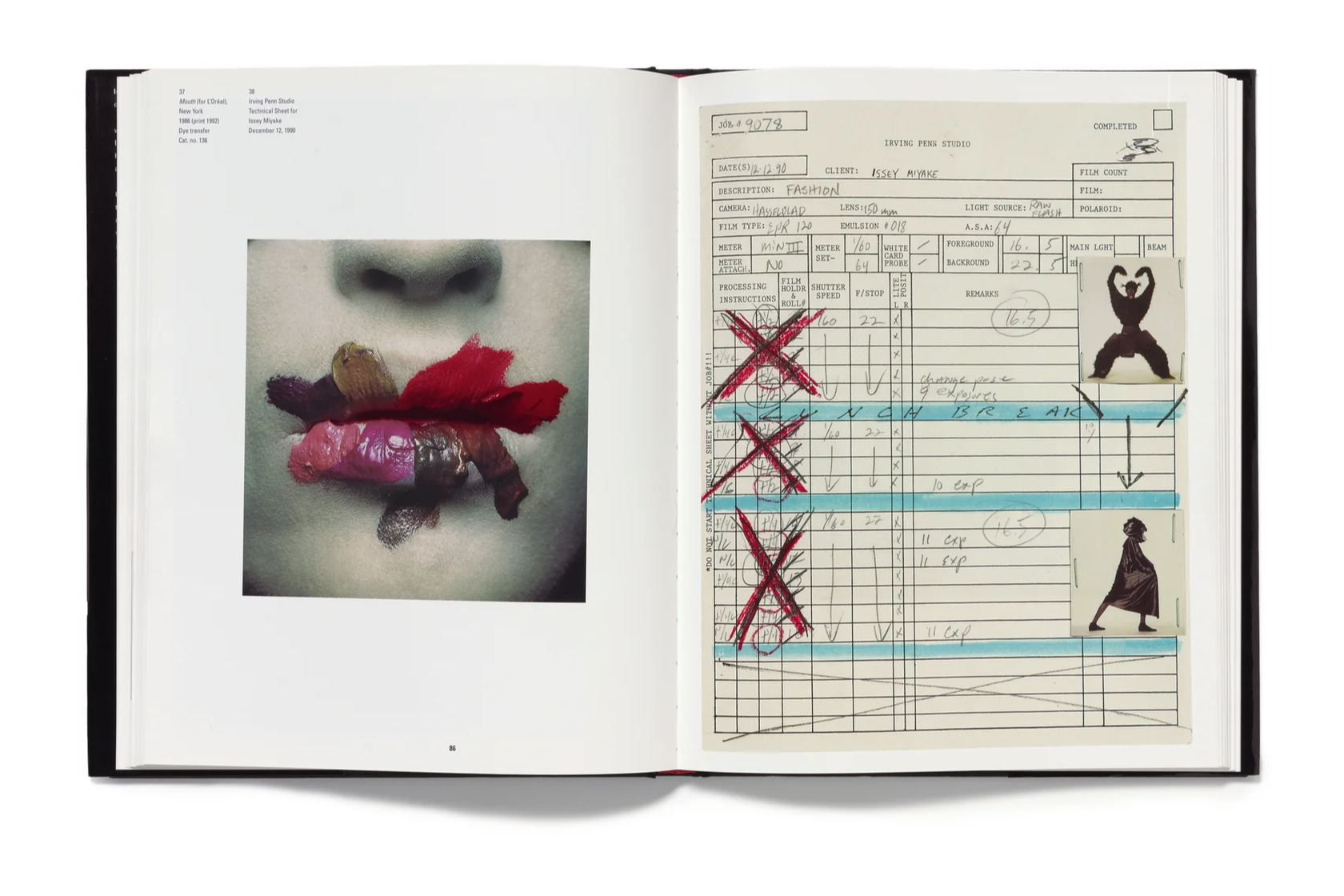
No single characteristic establishes authenticity. The assessment rests on the convergence of evidence: the physical characteristics of the print, the artist’s documented working and printing practices, edition and archive records, provenance and, where necessary, technical analysis. The physical object is therefore considered alongside its documentary history. This may include exhibition and publication records, edition information, stamps and inscriptions, provenance, and, where available, records held by the artist’s studio, estate, archive or foundation.
The Date of the Print
The distinction between when an image was made and when the physical print was made is fundamental to collecting photography. A vintage print is generally understood as a print made close to the time the negative was created. There is no universal chronological threshold for the designation; the relevant period depends on the photographer’s practice, the materials and techniques available, and the relationship of the print to the artist’s original working methods.
A later print, sometimes described as a lifetime print, was made after the image was created but during the photographer’s lifetime. Where it was made or authorized by the photographer, it is an authentic work, although its position within the artist’s printing history may differ from that of a print made close to the date of the negative.
A posthumous print is made after the photographer’s death. Its status depends on the authority under which it was produced and the artist’s documented printing and editioning practice. Where an estate, foundation, archive or other authorized representative controls the artist’s posthumous printing, its records may provide important evidence concerning the legitimacy of the print.
The distinction is one of chronology and printing history, not necessarily quality. A later print may have exceptional technical qualities, while a vintage print may have greater historical significance or scarcity. Two prints of the same image can therefore be equally authentic while occupying very different positions within the artist’s market.
The Process and the Object
A photograph’s process does not, in itself, establish authorship. A photographer may work in more than one process during a career, and the same image may exist in different forms. Process instead provides material evidence about when and how a particular print could have been made.
Gelatin silver, platinum-palladium, albumen silver and chromogenic processes each have distinctive material characteristics. A specialist may examine the paper, image material, binder, surface, dimensions and method of presentation, and compare these characteristics with those documented for the photographer and period in question.
The physical print is best assessed through direct examination. Surface, paper, dimensions, tonal characteristics and any evidence of mounting, alteration or other intervention can then be compared, where possible, with authenticated examples from the same period or with documented prints from the photographer’s studio, archive or estate.
Where questions cannot be resolved through visual and documentary examination alone, technical analysis may provide additional evidence. Depending on the photograph and the question being investigated, examination may include analysis of the paper, fibers, image material, coatings or other components. Such methods can assist with dating, process identification, provenance and authentication, but they are generally interpreted alongside art-historical and documentary evidence rather than treated as a standalone determination.
Condition
Condition is relevant to the assessment of a photograph, but it does not establish authenticity on its own. Photographic processes respond differently to light, humidity, temperature, handling and storage, and a specialist may examine the print for fading, yellowing, cracking, creasing, scratches, abrasion, staining, silvering or other forms of deterioration.
These characteristics should be interpreted in relation to the process, date and history of the object. Age alone does not determine condition, and visible signs of age do not prove that a print is authentic. A well-preserved photograph may remain in excellent condition for decades, while a more recent print may deteriorate through poor handling or environmental exposure.
Condition is therefore best treated as supporting context rather than primary authentication evidence. It can help assess whether a print is consistent with its purported date and history, while also having a direct bearing on value.
Markings, Signatures and the Reverse
Signatures vary considerably from one photographer to another. Some signed consistently, others only selectively, and many used studio stamps or did not sign at all. Practice may also change over the course of a career. A signature is therefore supporting evidence only and must be assessed against the photographer’s known working methods. Its absence does not necessarily affect authenticity.
The reverse of a photograph is often an important source of evidence. Stamps, labels and inscriptions may record the photographer’s studio, a gallery, exhibition, framer, printer or previous owner. The print may also carry a title, edition number, copyright notice, inventory number or handwritten annotation. These elements can help reconstruct a work’s history, but they must be read carefully and in context. Gallery labels may link a print to a specific dealer or exhibition; inventory or accession numbers may connect it to studio records, an estate archive or an institutional collection. The verso should therefore be treated as a primary documentary surface. It is often where aspects of a print’s history, from studio to gallery to collection, may be most directly recorded.
Editions
Editioning is central to the contemporary photography market because it establishes a framework for scarcity. It is less characteristic of many earlier photographs, which were often produced without a formal limited-edition structure. Where a photographer has created a limited edition, the edition number identifies an individual impression within the authorized edition. A notation such as 4/10 indicates the fourth numbered print in an edition of ten. The significance of an edition number depends on the artist’s established practice and records. It is therefore important to determine whether the stated edition corresponds with the edition actually authorized by the photographer, publisher, estate or foundation.
Editions may also be differentiated by size. A photographer may authorize separate editions for different print dimensions, with larger formats produced in smaller numbers. The edition number on an individual print therefore does not necessarily represent the total number of authorized prints of the image, particularly where separate editions were issued in different sizes, formats or processes, or where proofs and other authorized impressions exist. Other impressions may exist outside the numbered edition. Artist’s proofs, commonly marked A.P., are one example. The precise treatment of proofs varies by artist and edition, so they should be understood according to the photographer’s established practice rather than assumed to be interchangeable with numbered edition prints. Edition records are consequently important not only to valuation but to authentication. A print bearing an edition notation that cannot be reconciled with the artist’s documented edition structure requires further investigation.
Provenance and the Record
Provenance records the ownership history of a work. A strong provenance may connect the print to the photographer, studio, estate, original gallery, collector, institution or previous sale, providing evidence that links the physical object to its earlier history. A strong and verifiable provenance strengthens confidence in a work, while an incomplete ownership record does not, in itself, establish a problem.
Photographs may remain in private collections for extended periods, passing by private sale, gift or inheritance without generating extensive documentation. Provenance should nevertheless be considered alongside the physical and documentary characteristics of the print. A compelling ownership history can strengthen an attribution, but provenance does not in itself establish authenticity.
Exhibition and publication history can provide further evidence about an image and its place within an artist’s practice. A photograph reproduced in a monograph or exhibition catalogue demonstrates that the image was documented at a particular point in time, but the record may not necessarily relate to the specific physical print being examined. Its evidentiary value is stronger when the particular print can be identified through its dimensions, markings, provenance, edition information or another distinguishing characteristic.
Where an artist’s estate, foundation or archive maintains relevant records, those records may provide further evidence concerning negatives, prints, editions, stamps, printing practices and provenance. The nature and authority of an artist’s archive differ from one foundation or estate to another. What matters is the quality of the underlying records and their relevance to the particular print being examined. A certificate of authenticity may form part of this documentary record, but its evidentiary weight depends on who issued it, when it was issued, what records support it and whether it corresponds to the physical print.
The Role of the Specialist
For a work of material artistic or financial significance, the object and its record should be reviewed by a specialist with appropriate knowledge of the photographer, period and photographic process. Depending on the work, this may involve an auction-house specialist, a dealer with established expertise, a qualified scholar or curator, a conservator, or an artist’s estate, archive or foundation where it maintains relevant records or an established authentication practice.
The purpose of authentication is not simply to determine whether an image “looks right.” It is to establish, as far as the available evidence permits, the relationship between the physical object and the artist’s practice, records and history. In some cases, the available evidence may support a clear conclusion; in others, questions concerning the print’s date, provenance, edition or authorship may remain unresolved and require further research.
If you have questions, or are looking to have a work assessed, contact an Ithaca advisor. Every inquiry is confidential.