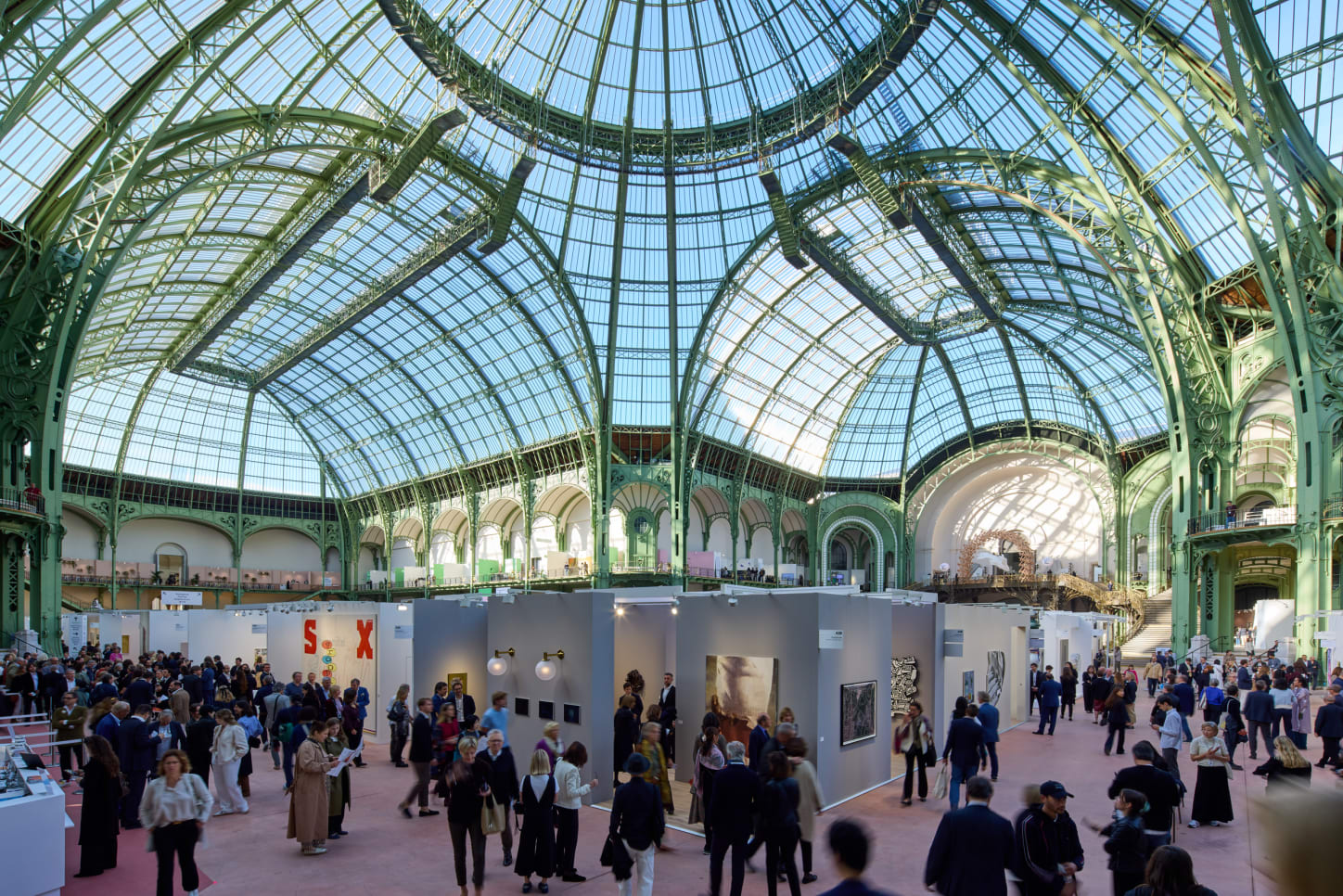
Art Basel Paris returns to the Grand Palais this week for its fifth edition, bringing together 211 galleries from 41 countries and territories. Taking place October 23 to 25, following invitation-only preview days on October 21 and 22, the fair draws an international audience of collectors and dealers to Paris for a week of exhibitions, acquisitions, and cultural programming.
The 2026 edition marks the first under the direction of Karim Crippa, as the fair continues to strengthen its position within the international art calendar. Beyond the presentations assembled at the Grand Palais, major museum exhibitions, private foundations, gallery programs, and public installations extend the week’s activities across the capital. For collectors, the convergence offers an opportunity to examine developments across established and emerging markets, while considering the artists, movements, and historical periods receiving renewed attention from galleries and institutions.
Paris and the International Art Market
According to the Art Basel and UBS Global Art Market Report 2026, art sales in France reached approximately $4.5 billion in 2025, an increase of 9% from the previous year and a return to growth following two consecutive years of contraction. France accounted for 8% of global sales, retaining its position as the world’s fourth-largest art market and the largest within the European Union.
Paris’s standing within the international art trade is supported by an extensive network of museums, private foundations, auction houses, and commercial galleries. Sustained investment from international dealers has further strengthened the city’s position, with Gagosian, Hauser & Wirth, David Zwirner, and White Cube among those maintaining permanent Paris locations. This year’s fair includes 64 exhibitors operating spaces in France, reflecting the depth of the domestic gallery sector alongside its international participation. Art Basel Paris provides an important opportunity to assess the strength of established collecting categories alongside areas attracting renewed scholarly and institutional interest.
Inside the Grand Palais: Three Sectors
The fair is organized into three sectors encompassing Modern, postwar, and contemporary art. Galeries, the principal sector, brings together 183 exhibitors, including Gagosian, Perrotin, Thaddaeus Ropac, Almine Rech, and Marian Goodman Gallery, alongside dealers representing younger and mid-career artists. A record 12 joint booths, involving 24 galleries, introduce collaborative presentations that bring distinct gallery programs and artistic perspectives into closer dialogue.
Emergence features 16 solo presentations dedicated to emerging artists, with an emphasis on new work and individual practices. Its 16 participating galleries offer an introduction to a younger generation of artists, many of whom are exhibiting at Art Basel Paris for the first time.
The expanded Premise sector takes a different approach, bringing together 12 historically focused presentations in the Grand Palais’ Salon Seine. Introduced to accommodate projects that fall outside the conventional parameters of a contemporary art fair, Premise examines lesser-known chapters of art history alongside established movements and figures. This year’s selection spans early experiments in computer-generated art, Brazilian Modernism, and postwar European painting, reflecting the growing prominence of historically researched presentations within the international fair circuit.
Beyond the Grand Palais
An integral part of Art Basel Paris is its engagement with the city’s cultural institutions and public spaces. This year’s Public Program extends across nine locations, presenting monumental sculpture, film, installation, and site-specific projects within some of the capital’s most significant architectural settings.
At the Parvis des Droits de l’Homme near the Trocadéro, White Cube presents three monumental bronze sculptures by Tracey Emin, while the Palais d’Iéna hosts Geste de Consolation, a project by French filmmaker Alice Diop commissioned by Miu Miu. At the Petit Palais, Cosima von Bonin’s Dollys & Beaux brings a sculptural installation into the museum’s historic setting, while Avenue Winston Churchill features works by Niki de Saint Phalle, Yinka Shonibare, Simone Fattal, and Alicja Kwade, among others.
The institutional calendar is equally substantial. The Musée d’Orsay presents Mary Cassatt, l’indépendante, examining the American Impressionist’s career and artistic independence, while the Musée d’Art Moderne de Paris hosts major exhibitions devoted to Kerry James Marshall and Simone Fattal. Together with the city’s extensive gallery programming, these exhibitions reinforce the relationship between the fair and Paris’s wider cultural landscape.
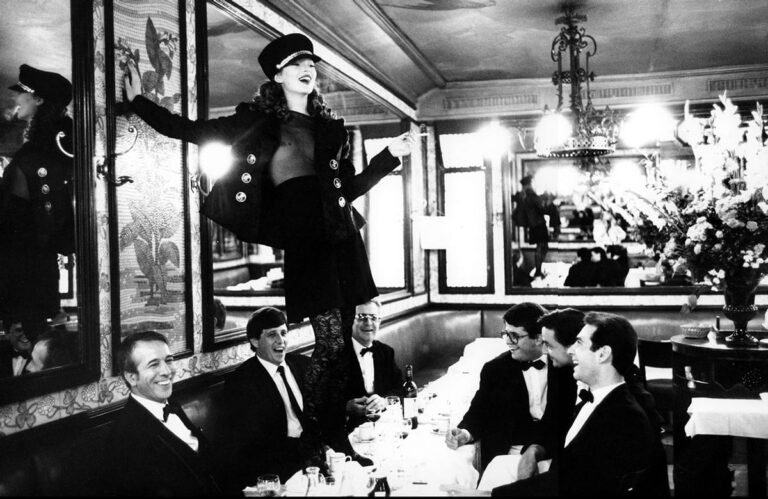
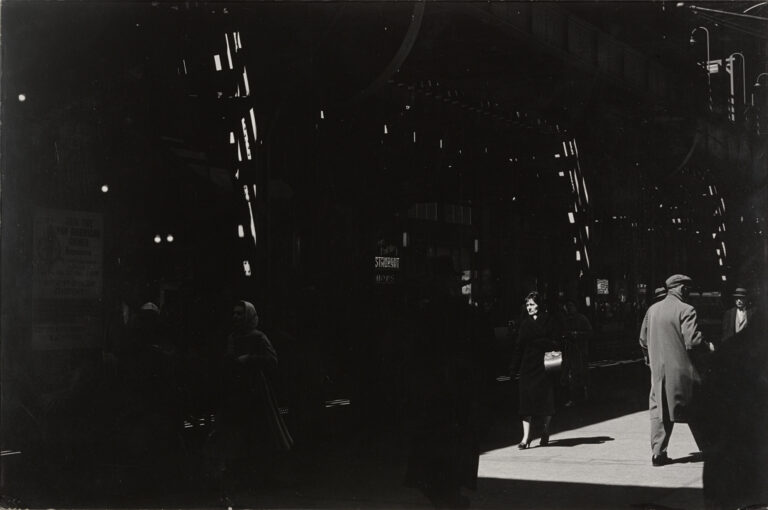
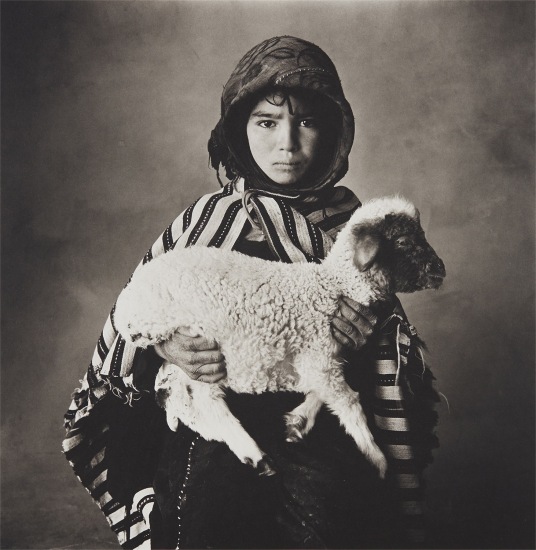
Photography is particularly well represented this autumn. At the Bourse de Commerce, the Pinault Collection presents Remember Me, an exhibition of more than 700 works drawn from the collection to mark the bicentenary of photography. The Maison Européenne de la Photographie examines six decades of Irving Penn’s fashion photography in PENN & FASHION, while the Musée des Arts Décoratifs presents an exhibition devoted to the contemporary fashion photographer Rafael Pavarotti. Collectively, the exhibitions offer perspectives on the medium’s historical development, its relationship with fashion, and its continued significance within contemporary artistic practice.
Looking Ahead
The opening of Art Basel Paris will provide one of the first substantial indications of market sentiment following the autumn fairs in London and ahead of November’s major auctions in New York. With international dealers presenting works across established and emerging categories, attention will turn to the pace of transactions, the depth of collector interest, and the extent to which demand extends beyond the most sought-after artists.
Yet the significance of this year’s edition is not confined to sales activity. The prominence of historically focused presentations alongside major contemporary programs reflects a market in which scholarship and artistic rediscovery increasingly inform collecting interests. Together, these developments offer a perspective on the evolving priorities of international collectors and the direction of the art market as the autumn season progresses.