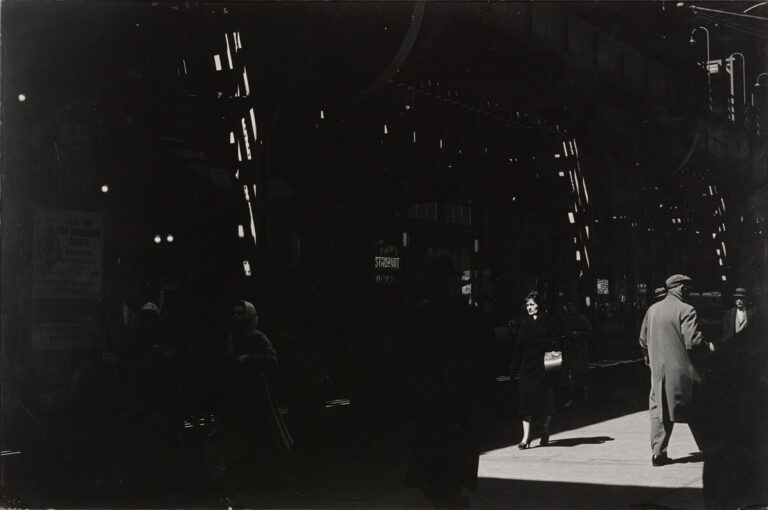
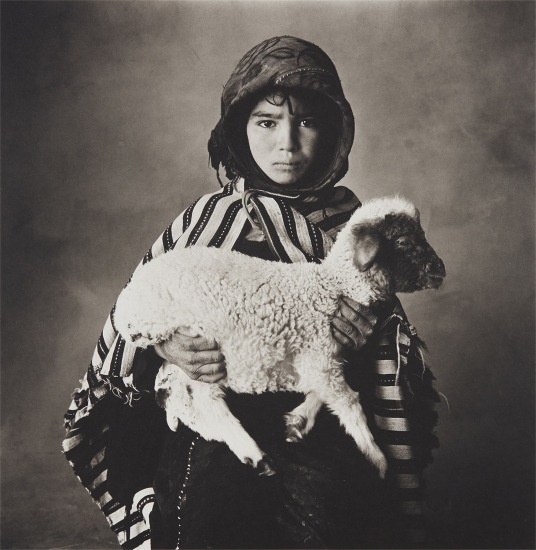
Provenance is the documented history of an artwork’s ownership, from its creation to the present. It establishes where a work has been, who has owned it and, where records survive, how it has moved through the market.
For collectors, provenance is an important part of due diligence. It can support questions of authenticity, establish the history of ownership and contribute to an artwork’s market value. A complete provenance is uncommon, particularly for older works. What matters is not simply whether a history is complete, but whether the information that exists can be substantiated.
What Provenance Records
At its most basic, provenance records the chain of ownership of an artwork. This may include the artist, previous owners, galleries and dealers, auction sales, transfers by gift or inheritance and the present owner. The history is established through documentation. Invoices and bills of sale, gallery records, exhibition labels, auction catalogues, correspondence, collection inventories, archival photographs, inscriptions and stamps, museum records and scholarly publications may all contribute to a provenance.
No single document is necessarily conclusive. Provenance is assessed by considering the evidence as a whole and determining whether different records are consistent with one another. Exhibition and publication history are related to provenance but are not themselves ownership history. They can nevertheless provide important points of corroboration by establishing where a work was exhibited, published or documented at a particular moment.
The strongest provenance is therefore not necessarily the longest. It is the history that can be supported by reliable documentation and independent evidence.
Provenance and Authenticity
Provenance does not, by itself, establish that an artwork is authentic. Authentication is a broader process that may involve connoisseurship, comparison with documented works, technical examination, archival research and, where appropriate, consultation with recognized scholarly or estate authorities.
Provenance can nevertheless be an important form of corroborating evidence. A record placing a work in the artist’s studio, with a documented dealer or gallery, or in a known collection at a particular date can help establish its history and place it within the documented record.
A gap in provenance should not automatically be interpreted as evidence against authenticity. The question should be assessed against all available documentation and physical records.
Provenance and Value
Provenance can have a material effect on the desirability and value of an artwork. A work with a distinguished ownership history may carry additional historical significance, particularly where it has belonged to an important collection, has been acquired directly from the artist or passed through a respected gallery. Exhibition and publication history can also strengthen a work’s position within an artist’s broader history.
Provenance is not, however, a value determinant in isolation. The artist, rarity, quality, condition, subject, date, edition, market demand and circumstances of sale all contribute to an artwork’s value. The distinction is particularly important in comparing works that are otherwise similar. A clear and well-documented ownership history can give collectors greater confidence in the object they are acquiring. Conversely, unresolved questions concerning ownership or significant gaps in the record may require additional research and can affect marketability. Provenance is therefore best understood as part of the overall assessment of a work, rather than as a standalone measure of value.
Provenance in Photography
Provenance can require additional consideration in photography because the photographic image and the physical print are distinct objects. A single negative, transparency or digital file may give rise to multiple authorized prints, produced at different dates, in different formats or by different printers. The provenance of a photograph must therefore be considered in relation to the individual print, rather than solely the image itself.
The print may contain important evidence of its history. Studio and estate stamps, gallery labels, inscriptions, edition numbers, printer’s marks and other annotations can help establish its relationship to the photographer, the circumstances of its production and the period in which it was made. Documentary evidence may include invoices, gallery records, exhibition catalogues, correspondence, estate inventories, certificates and published literature. Where an artist’s estate or foundation maintains records relating to posthumous printing, editioning or authorization, those records may provide important evidence of the history and status of a particular print.
Reading Gaps in a Provenance
A complete provenance is rare. Records may have been lost, never created, kept privately or simply failed to survive the passage of time, and a gap is therefore not, in itself, evidence of a problem. Its significance depends on context: a work may have passed privately between collectors without generating a public auction record, been transferred by inheritance or gift, or lost its earlier documentation through relocation and the ordinary passage of generations. Provenance research is therefore an assessment of what the available evidence establishes and what remains to be determined.
Researching Provenance
The depth of provenance research should reflect the significance of the work. For an important acquisition, a specialist may examine auction archives, gallery records, museum documentation, catalogues raisonnés, estate or foundation records, exhibition and publication history, archival material and the physical evidence present on the work itself. The objective is not to produce an impressive list of previous owners, but to establish a coherent and defensible history supported by evidence.
Provenance is best weighed alongside condition, authenticity, title, edition information where applicable and the broader market history of the work. These elements are interdependent, and are most usefully assessed together rather than in isolation.
Preserving Provenance
Provenance does not end when a work is acquired. Invoices, bills of sale, condition reports, certificates, exhibition records and correspondence should be kept with the work’s records, since future owners may rely on them to establish its history years or decades later. For collectors, this careful record-keeping is part of stewardship, and the documentation created today becomes part of the provenance of tomorrow.
A well-researched provenance does more than establish where an artwork has been. It provides a framework through which the work can be understood, assessed and responsibly transferred to the next owner.
For collectors seeking advice on provenance, acquisition or the documentation of a collection, Ithaca Gallery provides discreet specialist advisory services. Every inquiry is handled privately.