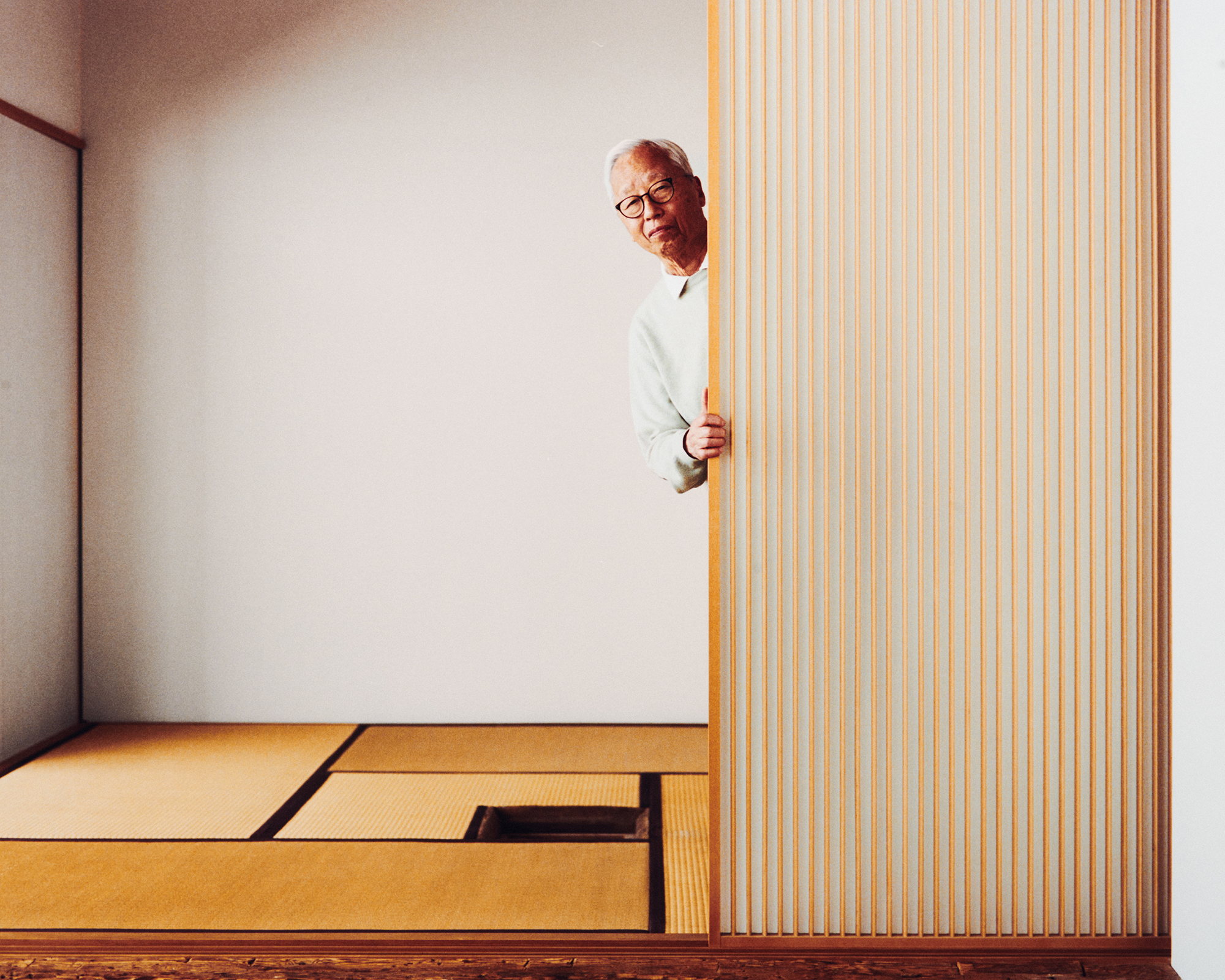
Hiroshi Sugimoto is among the most rigorous photographers of the past half century. For more than fifty years, he has examined the relationship between photography and time. Working predominantly in black and white and across sustained bodies of work, Sugimoto has developed a practice in which the technical properties of photography are inseparable from its conceptual possibilities. The Seascapes, begun in 1980, remain among the clearest expressions of this inquiry.
The Life and Work of Hiroshi Sugimoto
Sugimoto was born in Tokyo in 1948 and studied politics and sociology at Rikkyo University before leaving Japan for California, where he received his BFA from ArtCenter College of Design in 1974. He settled in New York that same year and later worked as a dealer in Japanese antiquities, an experience that informed his longstanding engagement with history and the preservation of objects across time.
His first major series, Dioramas, began in 1976 at the American Museum of Natural History in New York. Photographing taxidermied animals against painted museum backdrops, Sugimoto discovered that the camera could return an appearance of reality to an artificial scene. The distinction between the real and its representation, established in these early photographs, would remain a central concern throughout his practice.
By the late 1970s, he had begun the Theaters series, approaching photography through duration. Working inside American movie theaters, he left the shutter of his large-format camera open for the length of an entire film. The succession of projected images accumulated in a single exposure, producing a luminous white screen at the center of each photograph. The resulting image holds the film in its entirety, several hours of projected light gathered into a single frame.
Subsequent series expanded these investigations across a broad range of subjects. Sugimoto photographed wax figures according to the conventions of formal portraiture; canonical works of modern architecture deliberately out of focus; electrical discharges made directly on photographic film; and nineteenth-century mathematical models originally produced for scientific study.
Sugimoto began the Seascapes in 1980. The series developed from his consideration of whether a contemporary viewer could encounter a sight essentially unchanged from that seen by early humans. He found such continuity in the open sea. Each photograph divides the frame at the horizon, sea below and sky above, with no shore, vessel or figure to locate the image in a particular place or time. Sugimoto has since photographed bodies of water around the world, from the English Channel and Black Sea to the Tasman Sea, naming each for its location even as the particularities of place fall away.
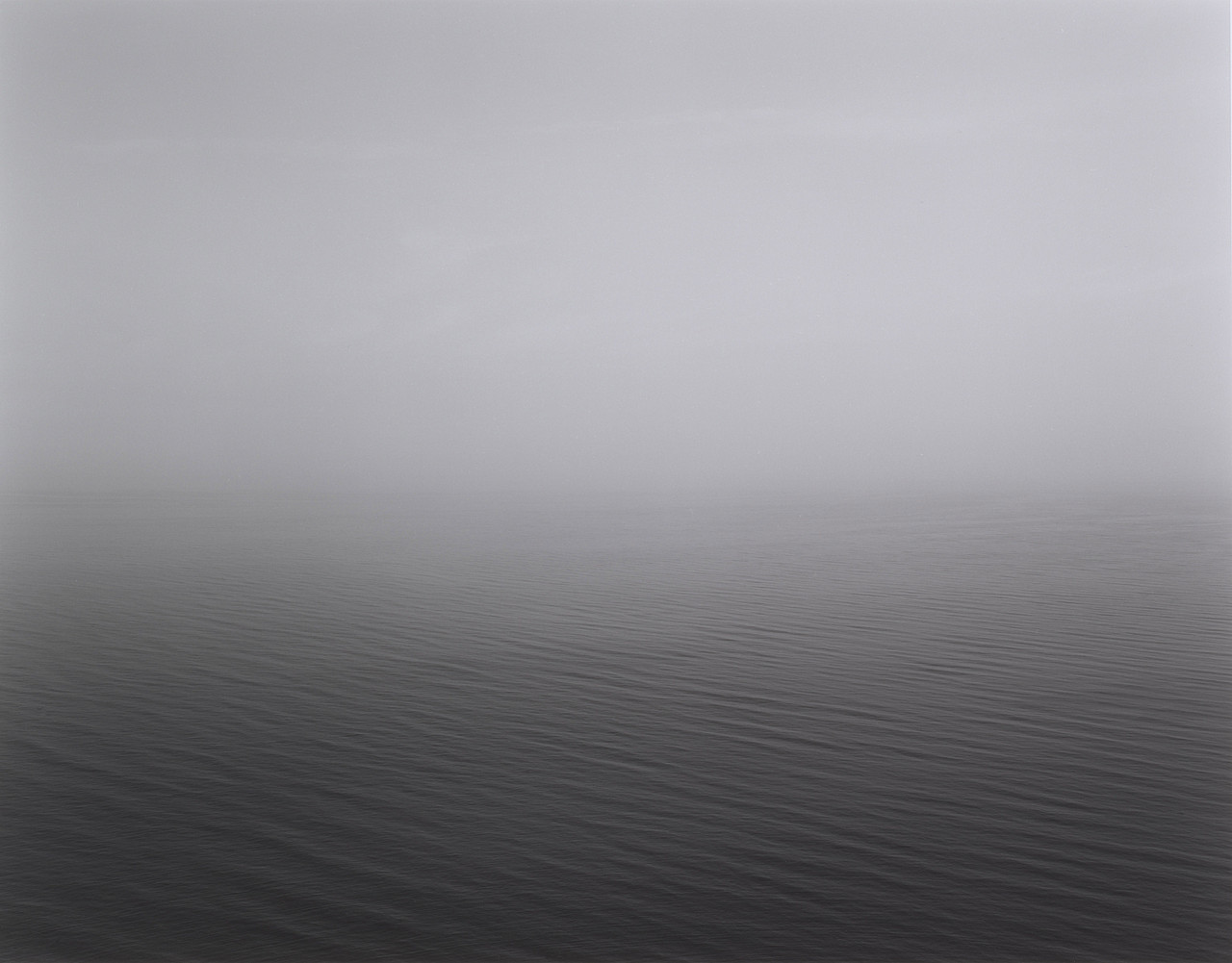
The apparent simplicity of the composition allows the series to operate across different registers of time. Each photograph records a specific location under particular conditions, yet the absence of contemporary markers removes it from an immediately identifiable historical moment. The Seascapes consequently bring together two scales of photographic time: the precise duration of an exposure and a view conceived as extending across human history.
In 2008, Sugimoto co-founded New Material Research Laboratory, an architectural practice concerned with the use of traditional materials and techniques. The following year, he established the Odawara Art Foundation. Its Enoura Observatory, which opened overlooking Sagami Bay in 2017, brings together architecture, landscape, antiquities and contemporary art within a site conceived around the movement of the sun.
Sugimoto’s work is held in major international collections including the Metropolitan Museum of Art, the Museum of Modern Art, Tate and the Centre Pompidou.
Hiroshi Sugimoto in the Market
Sugimoto has an established international secondary market spanning the principal series of his career, including the Dioramas, Theaters, Seascapes, Portraits and Architecture. Values vary according to series, date, scale, edition and provenance.
Among his most significant auction results is Black Sea, Ozuluce; Yellow Sea, Cheju; Red Sea, Safaga, 1991–92. The group of three unique prints sold at Christie’s New York in 2007 for $1,888,000, establishing a world auction record for the artist at the time.
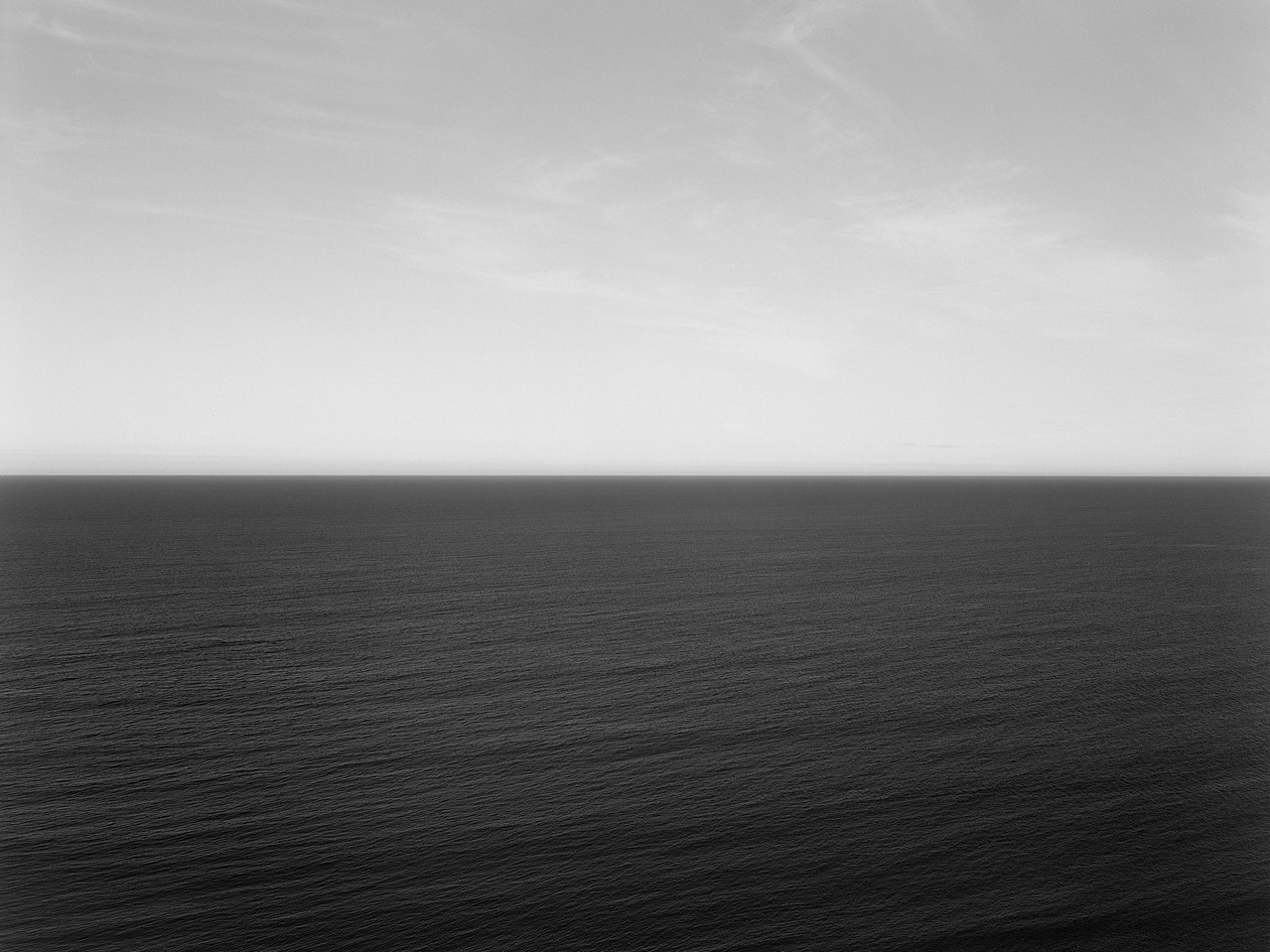
The Seascapes are also available in editioned form. Time Exposed, published by Kyoto Shoin in 1991, comprises fifty-one offset lithographs: fifty Seascapes made between 1980 and 1991, together with IBM Courtyard, Tokyo, 1991. The portfolio was issued in an edition of 500. Six works from the portfolio, including Black Sea, Ozuluce and Tasman Sea, Ngarupupu, will be presented in Ithaca Gallery’s upcoming October exhibition, Hiroshi Sugimoto: Seascapes.
Ithaca Gallery advises private collectors on significant 20th- and 21st-century photography, including works by Hiroshi Sugimoto, with expertise spanning acquisitions, private sales and valuations. All inquiries are handled privately and with discretion.