As Christie’s, Sotheby’s and Phillips prepare for their November marquee auctions, distinguished private collections and individual consignments with exceptional ownership histories occupy a prominent place in the season’s leading sales. From works associated with influential dealers and patrons to paintings retained in private collections for generations, the offerings underscore the enduring importance of provenance, particularly at the upper end of the market.
The season encompasses the collections of Agnes Gund, Theodore and Ruth Baum, Carlos Pedro Blaquier and Nelly Arrieta de Blaquier, Antonio Homem Sonnabend, Herbert Lust, Clive Davis and William I. Koch. Individual highlights include Wassily Kandinsky’s Betonte Ecken (1922–23), reportedly consigned by the Nahmad family, and Amedeo Modigliani’s Tête (1911–12), which has remained in private hands for more than half a century.
The Private Collections Shaping November’s Sales
At Sotheby’s, the collection of Theodore and Ruth Baum represents one of the season’s most substantial offerings of postwar art. Beginning with their acquisition of Mark Rothko’s Untitled (1967) in 1983, the couple assembled a collection encompassing major works by Joan Mitchell, Ed Ruscha, Andy Warhol, Alberto Burri and Lucio Fontana. More than twenty works will be offered in a dedicated evening auction on November 16, followed by a day sale on November 17, with the collection expected to exceed $100 million.
The Rothko, which marked the beginning of the Baums’ engagement with contemporary art, has remained in their collection for more than four decades. Joan Mitchell’s Green Book of Barbara Guest (1960), acquired in 1986 and held by the family ever since, will make its auction debut. The history of these acquisitions is significant not simply because of the duration of ownership, but because the works have remained with collectors who acquired them at an earlier stage in the development of their respective markets. Their appearance this November brings examples selected and retained over decades into a market that has since undergone considerable change.
Christie’s will present several collections whose significance extends into the institutional and commercial histories of contemporary art. The Collection of Agnes Gund, offered to benefit the Gund Art Foundation, includes works by Vija Celmins, Cecily Brown, Ellsworth Kelly, Roy Lichtenstein, Robert Rauschenberg, Cindy Sherman and Cy Twombly. Gund’s longstanding involvement with the Museum of Modern Art and her extensive philanthropic support of artists and institutions place the collection within a wider history of cultural patronage. Her collecting activities were closely connected to her advocacy for living artists and her commitment to expanding institutional engagement with contemporary art.
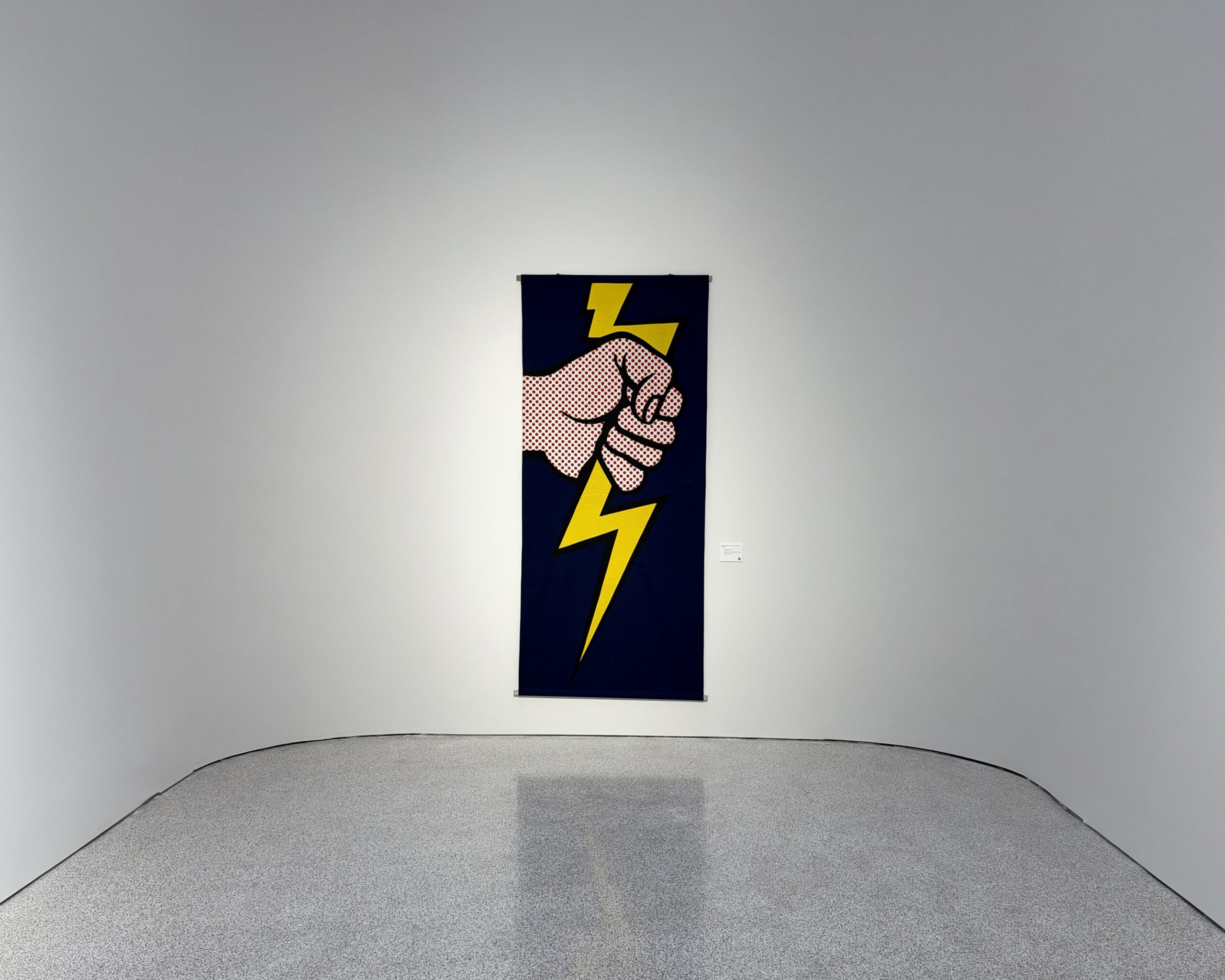
The Antonio Homem Sonnabend Collection, offered in Christie’s 21st Century Evening Sale on November 19, presents a different form of historical association. Ileana Sonnabend was instrumental in introducing American Pop Art to European audiences and subsequently played a major role in the development of the New York contemporary art market. The collection includes works by Jasper Johns, Roy Lichtenstein, Andy Warhol, Jeff Koons and Robert Rauschenberg, several of whom were closely associated with the Sonnabend Gallery.
The Herbert Lust collection similarly reflects the importance of relationships between artists and collectors. A scholar, patron and collector who developed personal connections with several of the artists he supported, Lust assembled works by Alberto Giacometti, Frank Stella and Robert Indiana, among others. Leading the offering is Giacometti’s Figure, demie grandeur (no. 2), a bronze conceived around 1949 and cast that year, with an estimate of $20 million to $30 million. The collection reflects a model of patronage in which scholarship, personal engagement and acquisition were closely intertwined.
The collections of Clive Davis and William I. Koch broaden the range of collecting histories represented this November. Davis’s holdings include works by Andy Warhol and David Hockney, while the Koch collection brings important Impressionist and Modern paintings to auction, including Claude Monet’s Champ d’avoine et coquelicots (1890) and Paul Cézanne’s Tasse, verre et fruits (circa 1877), each estimated at $12 million to $18 million. Although assembled under markedly different circumstances, both collections illustrate the role of sustained private collecting in determining the availability of important works within the secondary market.
Significant Provenance Beyond the Private Collection
The significance of provenance is not limited to the dispersal of named private collections. Individual consignments can carry equally consequential histories, particularly when their ownership is connected to influential dealers, established collecting families or earlier periods of institutional recognition.
Among the most prominent is Kandinsky’s Betonte Ecken (1922–23), offered in Christie’s 20th Century Evening Sale on November 17 with an estimate of $60 million to $80 million. Although catalogued as property from a distinguished European collection, the painting has been identified in market reporting as a consignment from the Nahmad family, whose extensive holdings and longstanding activities have made them among the most prominent dealers and collectors of twentieth-century art. The painting also has an important earlier provenance, having formed part of the collection assembled by Solomon R. Guggenheim. Its history therefore encompasses both institutional collecting and the private market for major works of Modern art.
Also at Christie’s, Gustav Klimt’s Litzlbergkeller (1915–16), estimated at $60 million to $80 million, and Pablo Picasso’s La leçon de dessin (1925), offered from the Collection of Anne H. Bass with an estimate of $15 million to $25 million, rank among the major individual works of the season. Their appearance alongside the named collection offerings illustrates the breadth of historically significant material entering the November market.
Historical Provenance and Artistic Legacy
At Sotheby’s, the Blaquier-Arrieta Collection, offered on November 18, includes twelve Impressionist and Modern works with distinguished histories of ownership. Cézanne’s Arlequin (1888–90), acquired by the family in 1975, previously passed through the hands of Ambroise Vollard, Paul Rosenberg and the Rothschild family, while Van Gogh’s Châtaigniers en fleurs (1890) traces its early ownership to Theo van Gogh and Johanna van Gogh-Bonger, whose efforts were instrumental in establishing the artist’s posthumous reputation.
At Phillips, Jackson Pollock’s Constellation (1946) carries an equally notable provenance, having belonged to Peggy Guggenheim and the critic Harold Rosenberg, both closely associated with the emergence of Abstract Expressionism. These ownership histories establish direct connections to individuals who played important roles in the careers of the artists concerned and in the wider recognition of their work, contributing a dimension of historical significance that extends beyond the reputation of the collectors themselves.
Long-Term Ownership and the Appeal of Fresh-to-Market Works
Phillips reports that nearly 90 percent of the works in its November 17 Modern & Contemporary Art Evening Sale will be appearing at auction for the first time, with many having remained in the same private collections for decades. The figure is notable in a market where the most important examples of an artist’s work are often held by museums or long-established private collectors, leaving relatively few opportunities for acquisition.
For collectors, the distinction between a work with an extensive auction history and one emerging from longstanding private ownership can be consequential. Auction records provide an established framework for comparison, but they also reflect the particular works that have been available for sale. An important painting or sculpture returning to the market after several decades may introduce an example of a quality, period or scale that has been largely absent from recent public transactions. Its appearance can therefore alter the range of works against which an artist’s market is assessed, while offering collectors an opportunity to consider material that has not been repeatedly exposed to public sale.
The appeal of such works rests on more than their absence from auction. Long-term ownership is most meaningful when accompanied by a documented collecting history, exceptional artistic quality and a clear understanding of the work’s place within an artist’s practice. An auction debut alone does not establish rarity or importance, but when these qualities coincide, the return of a significant work can attract substantial attention and provide an important test of demand.
The Continued Importance of Strong Provenance
The breadth of distinguished private collections and individual consignments appearing in New York this November reflects the continued emphasis placed on strong provenance when evaluating important works of art. For collectors, provenance remains an essential consideration in the acquisition of fine art, providing historical context, supporting confidence in authenticity and ownership, and informing assessments of quality and value. At the highest levels of the international market, where exceptional works are increasingly difficult to acquire, a distinguished and thoroughly documented history continues to contribute to the desirability of the most important examples.